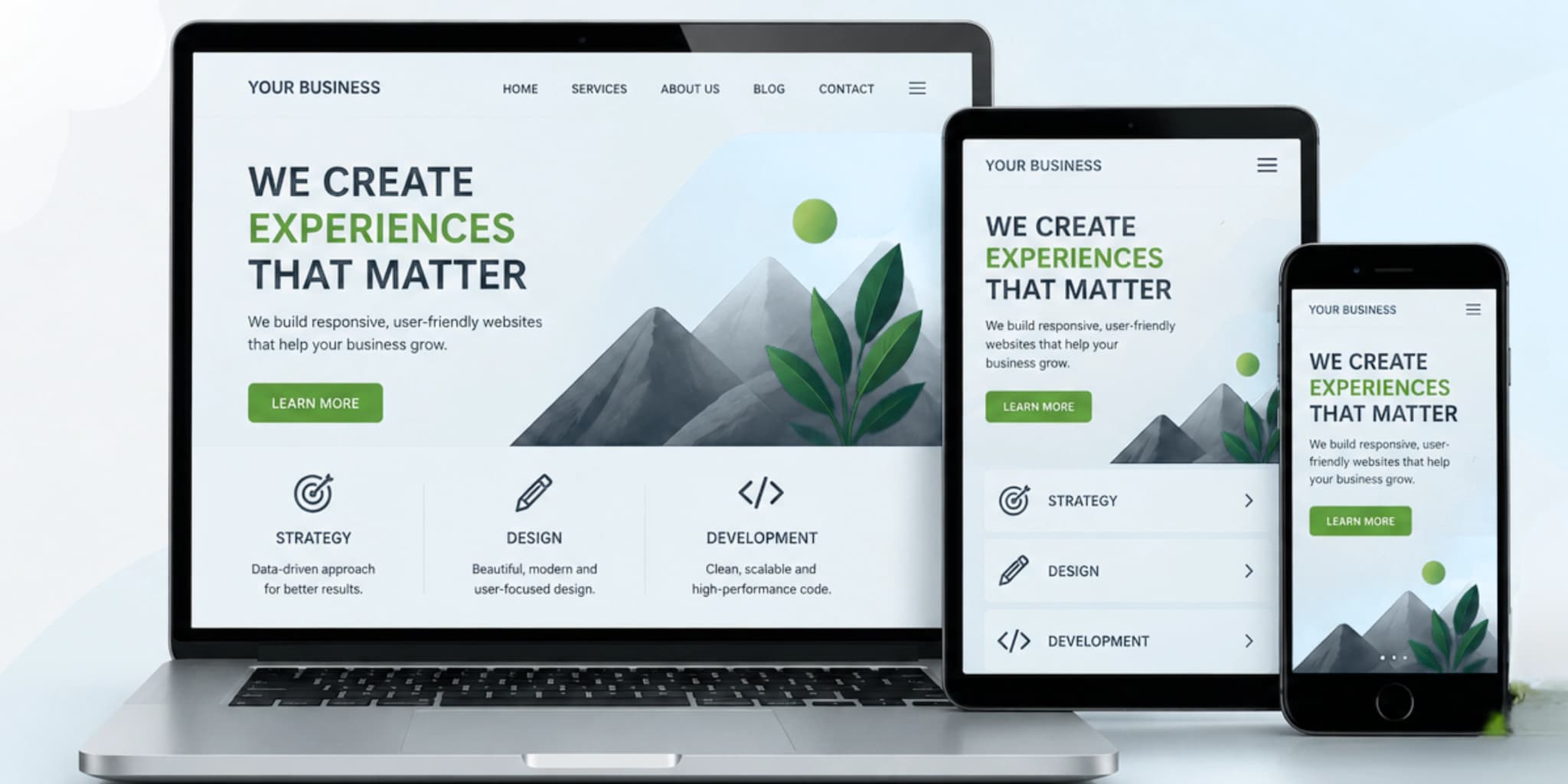
We live in a hyper-competitive digital world where users no longer judge digital products purely on functionality. They expect experiences that are intuitive, responsive, and tailored to their individual needs from the very first interaction.
More importantly, they expect products that adapt. Products that feel intelligent rather than instructional.
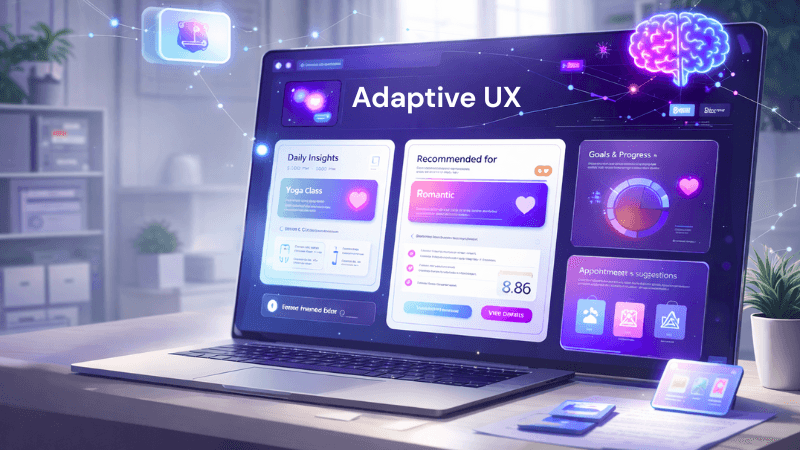
This shift has given rise to adaptive UX design, a new paradigm in AI-powered UX personalization where interfaces dynamically evolve in real time based on user behavior, context, and intent. For enterprises, adaptive UX is no longer a design trend. In fact, it is fast becoming a strategic lever for product adoption, retention, and digital experience transformation.
What Exactly Is Adaptive UX?
Traditional UX design operates on assumptions. Users are grouped into personas, and interfaces are designed for the “average” user within each segment. While this approach has served digital products for years, it breaks down at scale.
In reality:
A first-time user needs guidance and reassurance
An experienced user wants speed and shortcuts
A visually impaired user requires accessibility adjustments
A mobile user needs simplified interactions
A returning customer expects relevance, not repetition
Adaptive user experience with AI eliminates these static assumptions.
Using machine learning models, real-time analytics, and contextual intelligence, adaptive UX systems continuously observe how users interact with a product and dynamically adjust:
Interface layouts
Navigation paths
Content priority
Interaction patterns
Accessibility settings
The result is a personalized digital experience that evolves alongside each user to reduce friction, accelerate task completion, and improve usability at scale.

Personalization Is No Longer a Luxury
Enterprise leaders increasingly recognize that personalization directly impacts business performance. According to McKinsey, organizations implementing AI-driven personalization in UX report:
10-15% increases in conversion rates
Up to 20% improvements in customer satisfaction
Nearly 25% reductions in customer churn
Gartner further predicts that by 2027, over half of enterprise applications will feature real-time UX personalization as a standard capability. This clearly suggests that static interfaces are becoming a liability. Adaptive UX design powered by AI is rapidly becoming table stakes for modern digital products.
How AI Enables Real-Time UX Personalization
Adaptive UX is made possible by a combination of machine learning, behavioral analytics, and contextual inference. Key capabilities include:
1. Behavioral Pattern Detection
AI models analyze clicks, scroll depth, dwell time, hesitation points, and repeated actions to infer user intent. Interfaces adjust accordingly, surfacing frequently used features or simplifying complex flows.
2. Smart Content Prioritization
Rather than fixed dashboards, AI-powered interface design dynamically reorders modules based on relevance. Enterprise dashboards increasingly show role-specific KPIs without manual configuration.
3. Context-Aware UX Design
AI accounts for device type, environment, time of day, and user state. Mobile users see streamlined layouts, while multitasking users are presented with minimal, distraction-free interfaces.
4. Skill-Based Interface Adaptation
Adaptive UX systems identify user proficiency levels. Beginners receive guided workflows, and at the same time, power users gain access to shortcuts and advanced controls.
5. AI-Driven Accessibility
Adaptive systems automatically adjust contrast, typography, voice assistance, and interaction models to ensure inclusive experiences without requiring manual toggles.
Why Adaptive UX Delivers Immediate Business Value
For enterprises, adaptive UX is not a design enhancement, it is a product performance strategy.
Key business outcomes include:
Higher product adoption rates through reduced onboarding friction
Increased user engagement with AI-driven personalization
Lower support and training costs due to intuitive self-learning interfaces
Reduced customer churn with personalization-led experiences
Better product decisions driven by continuous behavioral insights
In competitive markets, adaptive UX also creates clear differentiation, especially where feature parity already exists.
Real-World Examples of Adaptive UX in Action
Leading digital platforms have already set the standard:
Amazon dynamically personalizes homepages for millions of users simultaneously.
Spotify adapts layouts, playlists, and discovery flows based on micro-behavioral patterns.
Enterprise FinTech platforms deliver role-based dashboards that reduce onboarding time by up to 40%.
EdTech products personalize learning journeys, improving completion rates and learner outcomes.
These examples demonstrate that dynamic user interfaces are no longer experimental, they are proven, scalable, and expected.
How Enterprises Can Implement Adaptive UX Strategically
Adopting adaptive UX does not require rebuilding products from scratch. Successful organizations start incrementally.
Best practices include:
Instrumenting user behavior to identify friction and opportunity points
Targeting high-impact UX areas such as onboarding, dashboards, navigation, and search
Deploying AI micro-models rather than monolithic personalization engines
Embedding AI into UX research and design workflows
Maintaining a human-plus-AI design culture, where designers guide strategy and AI enhances execution
This approach ensures scalability without sacrificing control or design integrity.
The Future of UX: Products That Feel Alive
With our User Experience Design Services, we focus on the future of AI in design—not just adding features, but creating products that learn, adapt, and evolve with their users.
Users will increasingly choose products that:
Understand their context
Anticipate their needs
Personalize without friction
Improve with every interaction
Enterprises that embrace UX modernization with AI today will define tomorrow’s digital experiences.
Ready to Explore Adaptive UX for Your Product?
If your organization is looking to:
Reduce user friction in digital products
Improve onboarding and adoption rates
Implement AI-driven product experiences
Modernize enterprise UX at scale
Seasia Infotech helps enterprises design and implement adaptive UX solutions that deliver measurable business outcomes.
Request a free UX + AI readiness assessment and explore how AI-powered personalization can transform your product experience.

_and_Business_Experience_(BX).webp&w=2048&q=75)