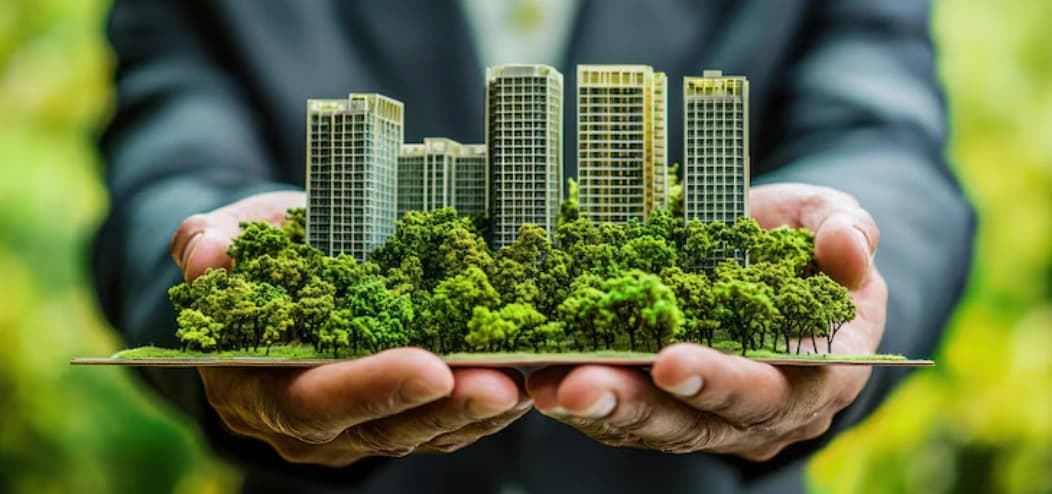
Sustainability has come a long way from being a niche consideration to a strategic imperative in sustainable real estate development in the UAE. Rising climate risks, tightening regulations, & shifting investor expectations are forcing sustainable real estate development to rethink how assets are designed, built, operated, and valued.
As a region historically associated with rapid urban expansion & iconic megastructures, the UAE is redefining its real estate narrative. Today, sustainability, energy efficiency, and digital intelligence are shaping the next generation of developments. Environmental goals, ESG-driven capital flows, and forward-looking government policies are collectively transforming the UAE real estate market into a global benchmark for sustainable urban innovation.
Rather than treating sustainability as a compliance checkbox, developers in the UAE are confidently identifying it as a driver of long-term profitability, resilience, and brand differentiation.
Government Initiatives Driving Sustainable Real Estate Development in the UAE
One of the strongest catalysts behind sustainable real estate development in the UAE is policy leadership. The government has taken a proactive role in shaping market behavior through long-term visions, regulatory mandates, and incentive frameworks that encourage innovation. These policies collectively strengthen sustainable real estate development by aligning environmental goals with economic growth.
Vision 2031 & the Net-Zero Agenda
The UAE Vision 2031 builds on earlier national strategies with a clear focus on economic diversification, environmental responsibility, & digital transformation. Real estate sits at the intersection of all three, establishing it as a critical lever for achieving national sustainability targets.
Complementing this is the UAE’s Net Zero by 2050 Strategic Initiative, which directly impacts how buildings are designed, powered, and operated. Developers are increasingly required to demonstrate measurable reductions in carbon emissions across the asset lifecycle.
Dubai Clean Energy Strategy 2050
Dubai’s Clean Energy Strategy aims to generate 75% of the emirate’s energy from clean sources by 2050. For real estate developers, this has accelerated the integration of solar power, smart grids, and energy storage systems into residential, commercial, and mixed-use developments.
Estidama and Green Building Codes
Abu Dhabi’s Estidama Pearl Rating System and Dubai’s Green Building Regulations have institutionalized sustainability across construction & operations. These frameworks encourage:
Energy- and water-efficient building designs
Sustainable material sourcing
Lifecycle performance monitoring
At the same time, international certifications such as LEED & WELL are becoming standard for premium developments to boost investor confidence and attract sustainability-focused tenants.
The result is a regulatory environment where technology adoption is essential for compliance, competitiveness, and credibility.
Looking to build real estate software that is loved by both Dubai’s population and policies? You’ll find Seasia Infotech’s sustainable IT solutions worth exploring.
Technology Trends Powering Sustainable Real Estate Development
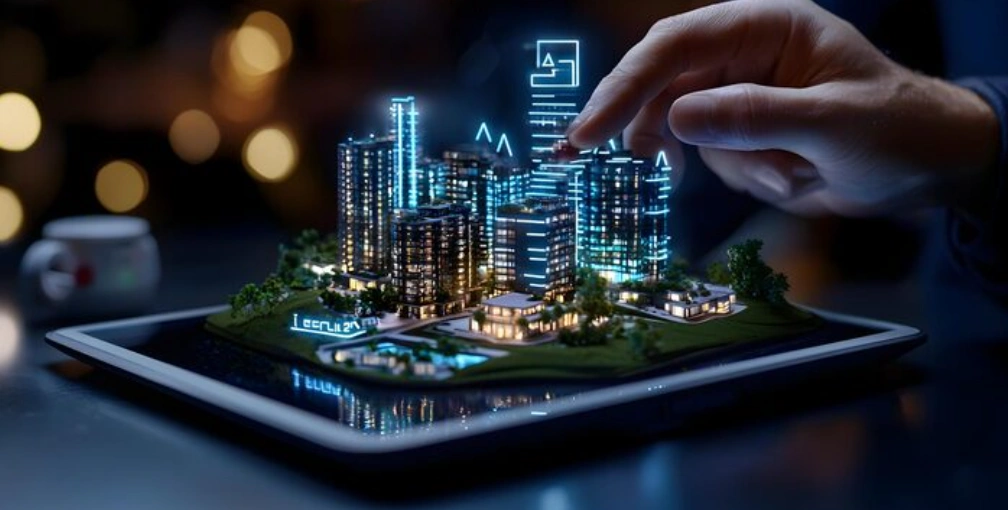
Technology-driven innovation has become a cornerstone of sustainable real estate development across residential, commercial, and mixed-use assets.
At the core of sustainable real estate development in the UAE is technology, enabling developers to move beyond static green features toward intelligent, adaptive, and data-driven environments.
AI & IoT Integration
Artificial intelligence & IoT are transforming buildings into responsive ecosystems. Sensors embedded across lighting, HVAC, elevators, and utilities collect real-time data, enabling:
Occupancy-based energy optimization
Predictive maintenance to reduce resource waste
Automated climate control aligned with usage patterns
These systems significantly lower operational costs while improving occupant comfort, making sustainability tangible for end users.
Digital Twins & BIM
Building Information Modeling and digital twin technologies allow developers to simulate buildings long before ground is broken. By creating virtual replicas of physical assets, teams can:
Optimize energy performance and airflow
Identify material inefficiencies
Reduce construction waste & rework
In the UAE, where scale and complexity are often high, digital twins are becoming indispensable tools for sustainable design & lifecycle planning.
Blockchain for Transparency & ESG Reporting
Sustainability is increasingly tied to trust and traceability. Blockchain technology is emerging as a powerful enabler for transparent green financing, carbon credit tracking, and ESG reporting.
For investors and regulators, blockchain-backed data ensures that sustainability claims are verifiable, auditable, and tamper-proof, reducing greenwashing risks & improving capital access.

Renewable Energy & Energy Storage Systems
Solar integration is no longer limited to rooftops. Developers are embedding photovoltaic panels into façades, parking structures, and community-scale grids. Coupled with advanced energy storage systems, buildings can:
Reduce reliance on centralized grids
Smooth energy demand fluctuations
Enhance resilience during peak loads
These systems are foundational to achieving net-zero & energy-positive developments.
Water Efficiency & Smart Irrigation
Water scarcity is a critical sustainability challenge in the UAE. Smart water management systems leverage IoT sensors & AI data analytics to monitor consumption, detect leaks, and optimize irrigation schedules.
Greywater recycling, smart landscaping, and real-time usage dashboards are becoming standard features in sustainable developments.
AR/VR in Sustainable Design and Stakeholder Alignment
Augmented & virtual reality technologies are improving design accuracy and stakeholder engagement. Developers, architects, and regulators can visualize sustainability outcomes—such as daylight optimization or energy flows—before construction, reducing errors and ensuring alignment with green objectives.
Expert team of developers and relevant industry experience equips us to deliver efficient and sustainable real estate software, fast. Let’s discuss your requirements.
Challenges and Adoption Barriers in Sustainable Development
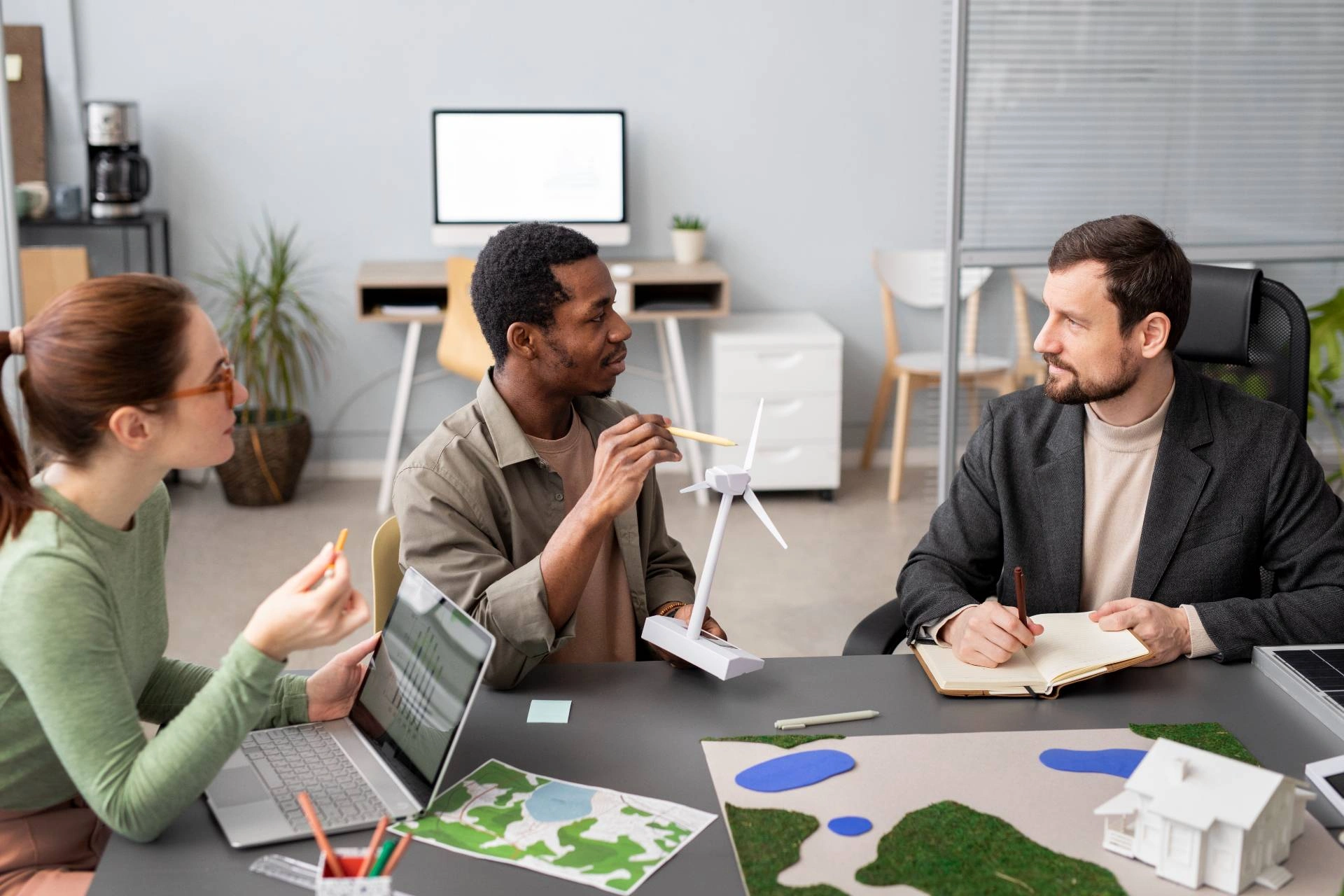
Despite strong momentum, sustainable real estate development in the UAE faces several challenges that slow large-scale adoption, including high upfront costs and skill gaps.
High upfront costs remain a concern, particularly for advanced technologies such as energy storage, digital twins, and AI platforms. While lifecycle savings are substantial, financing models must evolve to support initial investments.
Skill gaps also persist. Implementing and managing smart systems requires cross-disciplinary expertise spanning construction, data engineering, and sustainability analytics. Additionally, integrating diverse digital platforms can create interoperability and data governance challenges.
However, these barriers are increasingly being addressed through public-private partnerships, proptech ecosystems, and specialized digital transformation partners.
Benefits of Technology-Driven Sustainability
When implemented strategically, sustainable real estate delivers measurable business value.
Automation, predictive analytics, & optimized resource usage improve operational efficiency, lowering long-term operating expenses. Smart systems also enhance tenant experiences by providing healthier, more comfortable, and more responsive environments.
From an asset perspective, sustainable buildings command higher valuations, stronger occupancy rates, and longer asset lifecycles. They are also better positioned to comply with evolving regulations, reducing future retrofit risks.
Most importantly, sustainability strengthens brand equity. Developers associated with responsible innovation attract global investors, premium tenants, and long-term institutional capital. From an investment standpoint, sustainable real estate development improves asset performance, valuation stability, and long-term risk mitigation.
UAE’s Flagship Smart and Sustainable Projects
Masdar City
Masdar City in Abu Dhabi stands as a global benchmark for sustainable urban development. Designed around renewable energy, walkability, and smart infrastructure, it demonstrates how large-scale developments can achieve low-carbon outcomes without compromising functionality.
The Sustainable City, Dubai
This project showcases real-world applications of AI-enabled energy management, solar-powered homes, smart mobility, and circular waste systems—proving that sustainable living can be both practical & commercially viable.
Dubai Creek Harbour
Dubai Creek Harbour blends luxury with sustainability by integrating smart building technologies, energy-efficient design, and environmentally conscious urban planning to set new standards for premium developments.
Let’s join hands with a software development company in Dubai, UAE to build smart software for the next flagship sustainable project.

The Future of Sustainable Real Estate Development (2025 and Beyond)
Looking ahead, sustainable real estate development will be defined by deeper integration of AI, circular construction practices, and net-zero energy systems.
As the UAE moves toward 2025 and beyond, the convergence of technology, policy, and capital will have a fundamental impact on real estate development. Net-zero design, circular construction practices, and AI-powered urban ecosystems will become the norm rather than the exception.
Sustainable real estate development in the UAE is now driven by both incremental improvements and systemic transformation. Developers who embrace digital intelligence, regulatory alignment, & long-term environmental thinking will define the next phase of urban growth.
The message is clear — sustainable real estate development is no longer optional. It is the foundation of future profitability, resilience, and innovation in the UAE’s real estate landscape.
Let’s start building right away!