Every time a payment gateway goes down or glitches, an enterprise loses revenue, and a customer walks away. For large-scale global commerce, juggling dozens of regional APIs and isolated processors creates an absolute mess of engineering debt. A single bottleneck in checkout pipeline instantly spikes cart abandonment.
That is why leading brands are moving away from rigid, fragmented setups. Implementing a payment orchestration platform decouples core business logic from individual processors. This gives a single, centralized command center to route transactions intelligently, prevent system downtime, and protect margins as brands scale globally.
What is a Payment Orchestration Platform?
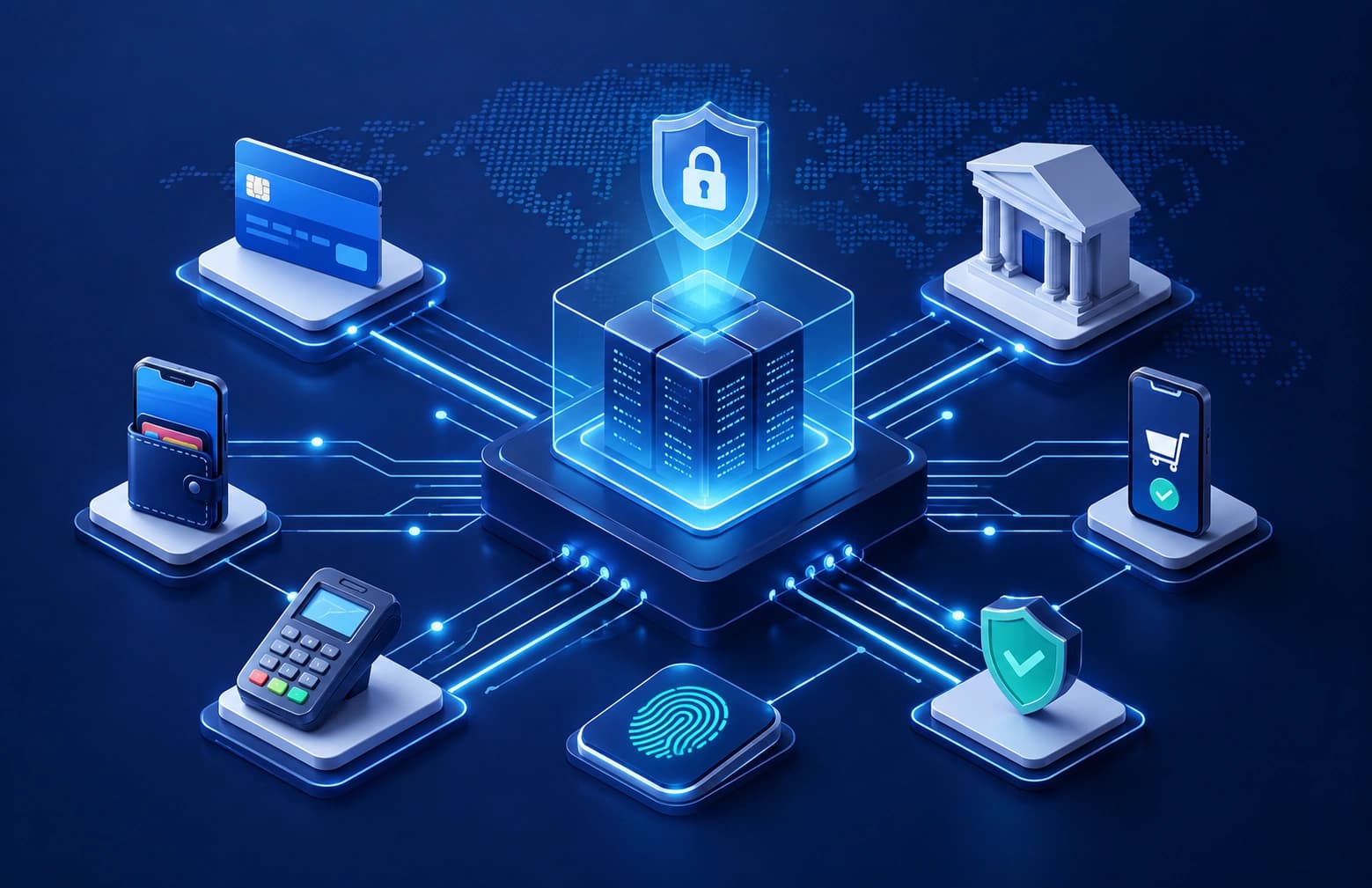
A payment orchestration platform is a centralized software layer that unifies multiple payment gateways, acquiring banks, alternative payment methods, and fraud detection services into a single interface. Operating as middleware between the front-end checkout application and back-end financial endpoints, the platform manages the entire lifecycle of a transaction.
The primary purpose of an orchestrator is to centralize transaction management, allowing enterprises to programmatically dictate how transactions are processed based on real-time parameters.
Unlike traditional setups where each gateway is managed via its own API, a payment orchestration platform development handles gateway selection, transaction routing, compliance validations, and settlement reporting through a unified system. For large-scale digital platforms, global marketplaces, and multi-national subscription businesses, this architecture eliminates vendor lock-in, optimizes operational overhead, and ensures transactional redundancy.
Enterprise use cases for payment orchestration software typically fall into three primary patterns:
1. Global B2C Commerce Platforms
Routing international transactions to local acquiring banks to minimize cross-border processing fees and improve approval rates.
2. High-Volume Subscription and SaaS Networks
Using automated retry cascades to recover soft declines on recurring billing files without customer intervention.
3. Multi-Vendor Marketplaces
Unifying payment collections from diverse channels and managing automated split-payouts to vendors through regional banking rails.
Why Do Modern Businesses Need Payment Orchestration?
The larger an organization becomes, the more challenging it is to manage a fragmented payment ecosystem through manual processes alone. As a result, payment orchestration has evolved into an essential part of enterprise payment infrastructure for reasons including:
1. Global Expansion and Checkout Localization
International markets require local payment methods. In East Asia, digital wallets dominate, whereas European customers favor Account-to-Account bank transfers. An orchestration layer allows teams to launch localized checkouts dynamically without rebuilding the payment code.
2. Mitigating Cross-Border Fees
Cross-border processing often incurs additional interchange and acquiring costs, making local acquisition an important optimization strategy. Orchestration allows routing transactions to local acquiring banks within the consumer's geographic region, drastically reducing payment processing fees.
3. Regulatory Compliance Complexity
Compliance requirements like Europe’s PSD2 Strong Customer Authentication (SCA) and global PCI DSS guidelines require rigorous engineering oversight. Orchestration centralized policy enforcement, enabling scalable compliance management across all connected payment channels.
4. Operational Resilience
Technical outages at major payment service providers can cost enterprises millions in lost sales. A neutral orchestration layer acts as insurance, automatically routing traffic to alternative providers during localized network failures.
Architectural Comparison: Orchestrator vs. Gateway vs. Processor
To design an effective payment infrastructure, it is critical to distinguish between the three primary components of the payment stack.
Feature | Payment Processor | Payment Gateway | Payment Orchestration Platform |
|---|---|---|---|
Role | Execution layer connecting card networks and banks. | Secure digital conduit transmitting checkout data. | Overarching management and logic abstraction layer. |
Core Functionality | Authorizes, clears, and settles funds. | Encrypts and sends transaction payloads. | Evaluates, routes, retries, and reconciles transactions. |
Routing Capabilities | Fixed, single-path routing. | Direct, static connection to one processor. | Algorithmic routing based on real-time gateway performance. |
Integration Scope | Proprietary integration | Single API connection to a specific ecosystem. | Unified API connecting dozens of gateways and APMs. |
Analytics & Reporting | Raw transaction data logs. | Gateway-specific reporting dashboards. | Normalized cross-provider dashboards and metrics. |
Scalability | Tied to processor capabilities. | Requires new API integrations to scale. | Plug-and-play scaling of channels and gateways. |
Enterprise Suitability | Low flexibility for complex stacks. | High for regional SMBs, bottleneck for global enterprise. | Essential for high-volume, multi-market operations. |
How a Payment Orchestration Platform Works?
The transaction sequence within a custom payment orchestration platform operates via automated micro-decisions designed to maximize success rates and minimize costs:
1. Payload Extraction and Parsing
When a transaction is initiated, the platform receives a unified payload containing transaction details, including card BIN numbers, purchase value, currency, geographic origin, and device metadata.
2. Dynamic Routing Assessment
The intelligent routing engine processes these variables in milliseconds. It evaluates historical approval metrics, gateway health, processing costs, and local rules to determine the optimal gateway for the transaction.
3. Fraud Pre-Screening
Before forwarding the payload, the platform triggers integrated fraud detection systems, running behavioral profiling and security checks to intercept chargeback vectors.
4. Execution and Cascading
The transaction is routed to the selected gateway. If the gateway issues a soft decline or experiences a timeout, the cascading engine instantly directs the payload to a backup acquiring bank without prompting user re-entry.
5. Normalized Settlement and Reconciliation
Upon successful authorization, the orchestrator normalizes transaction responses into standardized ledgers, sending automated data transfers to internal enterprise systems.
Key Features of a Payment Orchestration Platform Development
To deliver measurable operational advantages, an enterprise-grade multi-gateway payment solution must incorporate several foundational features:
1. Multi-Gateway Support & Unified API
A primary advantage is replacing disparate gateway APIs with a single integration point. This allows software developers to implement the payment architecture once, managing integrations from an administrative console rather than directly editing codebase files.
2. Intelligent Payment Routing & Failover
The core engine must support deterministic (rule-based) and non-deterministic (AI-driven) routing. If a primary processor's authorization rate drops in a specific region, the system shifts traffic to a healthier alternative payment routing software layer instantly.
3. Secure Token Vault Architecture
By deploying a gateway-agnostic token vault, enterprises preserve cardholder tokens independently of the payment processors. If a provider relationship is severed, customer profiles remain secured in the merchant's vault, enabling migration across gateways without forcing users to re-input payment credentials.
4. Comprehensive Analytics & Automated Reconciliation
Consolidated reporting modules compile transactional records from multiple payment rails into a normalized dashboard. It facilitates automated reconciliation by aligning bank payouts, processor invoices, and inner database records, saving hours of manual labor for accounting divisions.
Technology Stack and Essential Integrations
Designing an orchestration system capable of processing thousands of transactions per second requires a highly resilient, cloud-native tech stack.
1. Frontend Frameworks
React.js and TypeScript for developing merchant administration panels, alongside native iOS/Android SDKs to support embeddable checkout modules.
2. Backend Services
Node.js, NestJS, or Go, utilized to construct scalable microservices that run routing and translation logic with millisecond latencies.
3. Databases & Event Caching
PostgreSQL for ACID-compliant transaction records, Redis for distributed session caching, and Apache Kafka for handling transaction queues and event-driven logging.
4. Cloud Infrastructure & Security
Kubernetes-based container orchestration on cloud systems like AWS or Azure, combined with confidential computing, is increasingly being explored for highly sensitive payment workloads.
5. Third-Party Integrations
API-first connections to global payment systems, open banking platforms, fraud detection services, automated KYC checkers, and ERP software platforms.
Payment Orchestration Platform Development Process
Building an enterprise-ready orchestration layer is a structured engineering process that prioritizes stability, security, and high performance:
1. Discovery and Technical Architecture Planning
Engineers map the processing requirements, identifying targeted regions, expected transaction volumes, and required payment methods. They design a system topology based on secure microservices to isolate independent gateway connectors from the core engine.
2. Integration Design and Normalization
The engineering team establishes a unified API schema. This involves translating varied error responses, settlement payloads, and transaction statuses from external gateways into standardized internal formats.
3. Security Infrastructure Construction
Development squads build a centralized token vault. Implementing format-preserving encryption (FPE) and managing credentials through a dedicated Hardware Security Module (HSM) is crucial to keeping raw primary account numbers isolated from standard databases.
4. Testing and Compliance Validation
QA specialists run rigorous security and performance testing. They test network degradation paths, mock API failures, and execute automated failover scenarios while validating compliance with international PCI DSS compliance requirements.
For example, Seasia’s creator monetization platform is a good example of why this matters in practice. The solution was built with a compliance-ready payment architecture, wallet support, and multi-currency flow to keep monetization running without breaking the checkout experience. That is the kind of outcome enterprises look for when they invest in payment infrastructure development.
5. Deployment & Continuous Optimization
The platform is deployed in an active, multi-region cloud setup to ensure maximum uptime, using canary deployments to migrate transaction traffic safely.
Leveraging Seasia's software development services and agile delivery frameworks can significantly streamline this process.
Development Cost and Timeline
Developing a custom, enterprise-grade payment orchestration platform requires a realistic understanding of the necessary budget and engineering timeline. The market for payment orchestration platforms is growing rapidly, with projections indicating it will scale to $7.41 billion by 2030 at a 19.3% CAGR.
Building a custom POP is a complex, long-term undertaking with costs typically scaling based on architectural complexity and the number of integrations.
Basic POP (Startup/Small Business): $80,000 - $150,000 (4-6 months).
Average Complexity (Enterprise, multiple PSPs, basic routing): $250,000 - $600,000 (6-9 months).
Complex (AI-powered smart routing, custom compliance, multi-region): $1,000,000+ (10-12+ months).
Key Factors Influencing Cost and Timeline
Integration Density
Adding standard credit card processors requires less development effort than integrating localized alternative payment methods, real-time banking networks, and local compliance layers across different regions.
Security & Regulatory Scope
Incorporating dedicated token vaults, hardware security modules, and multi-region regulatory compliance engines adds significant complexity, increasing development timelines.
System Intelligence and AI Engine
Implementing rules-based static routing logic is relatively straightforward. However, building an automated machine learning engine that dynamically adapts routing based on real-time bank performance metrics requires advanced data science capabilities.
Latest Market Trends and Innovations
The payments orchestration ecosystem is evolving to meet new enterprise needs:
AI-Powered Routing and Anomaly Interception
Modern orchestrators use predictive machine learning engines to evaluate issuer behaviors and network patterns in real-time, preemptively routing around gateway latency to improve transaction success rates.
Agentic AI and Autonomous Transactions
As autonomous software agents begin evaluating purchase options, comparing values, and placing orders, the payments industry is shifting toward automated, machine-to-machine checkout models. To succeed, platforms must optimize their checkouts to support automated authorization flows.
Network Tokenization Optimization
Replacing standard merchant tokens with secure Visa and Mastercard network tokens across the entire processing lifecycle helps enterprises decrease compliance scope, improve security, and raise card-issuer success rates.
Stablecoin and Blockchain Integration
Large-scale treasury networks are piloting blockchain integration and tokenized assets to bypass traditional, slow cross-border rails, enabling cost-effective international settlement.
Open Banking and Local Bank Rails
In response to high credit card fees, orchestrators are building direct connections to real-time account-to-account (A2A) payment networks, such as Pix, UPI, and open banking protocols.
Business and Revenue Impact
Implementing payment orchestration provides measurable financial advantages across several operational layers:
Authorization Rate Optimization
Moving beyond static routing configurations and using dynamic routing and automatic failovers allows enterprises to improve overall transaction success rates.
Minimized Development and Maintenance Spend
By consolidating multiple gateway connections into a single API framework, engineering teams spend less time updating individual APIs and more time focusing on core application development.
Reduced Transaction Fees
Directing payments to the most cost-effective gateway or using domestic acquiring banks allows enterprises to negotiate better processing rates and minimize cross-border surcharges.
Resilient Infrastructure and Downtime Protection
Automated retry cascades intercept soft declines and database errors, ensuring transactions complete successfully even during regional provider outages. This helps prevent payment processing failures, which can cost enterprises significant revenue.
Conclusion
As digital payment methods, regional compliance requirements, and transaction paths continue to diversify, building a modern payment infrastructure is critical for global enterprises. Legacy, single-gateway payment systems are no longer sufficient for businesses that require high reliability, dynamic local checkouts, and optimized processing margins. Developing a dedicated payment orchestration platform allows enterprises to gain complete structural control over their transactional infrastructure, lower processing costs, and maximize checkout success rates.
For enterprises pursuing payment modernization initiatives, partnering with an experienced technology partner is critical. Seasia Infotech combines deep FinTech software development services with cloud-native engineering capabilities to build secure, scalable, and highly resilient payment orchestration platforms tailored to complex enterprise requirements.