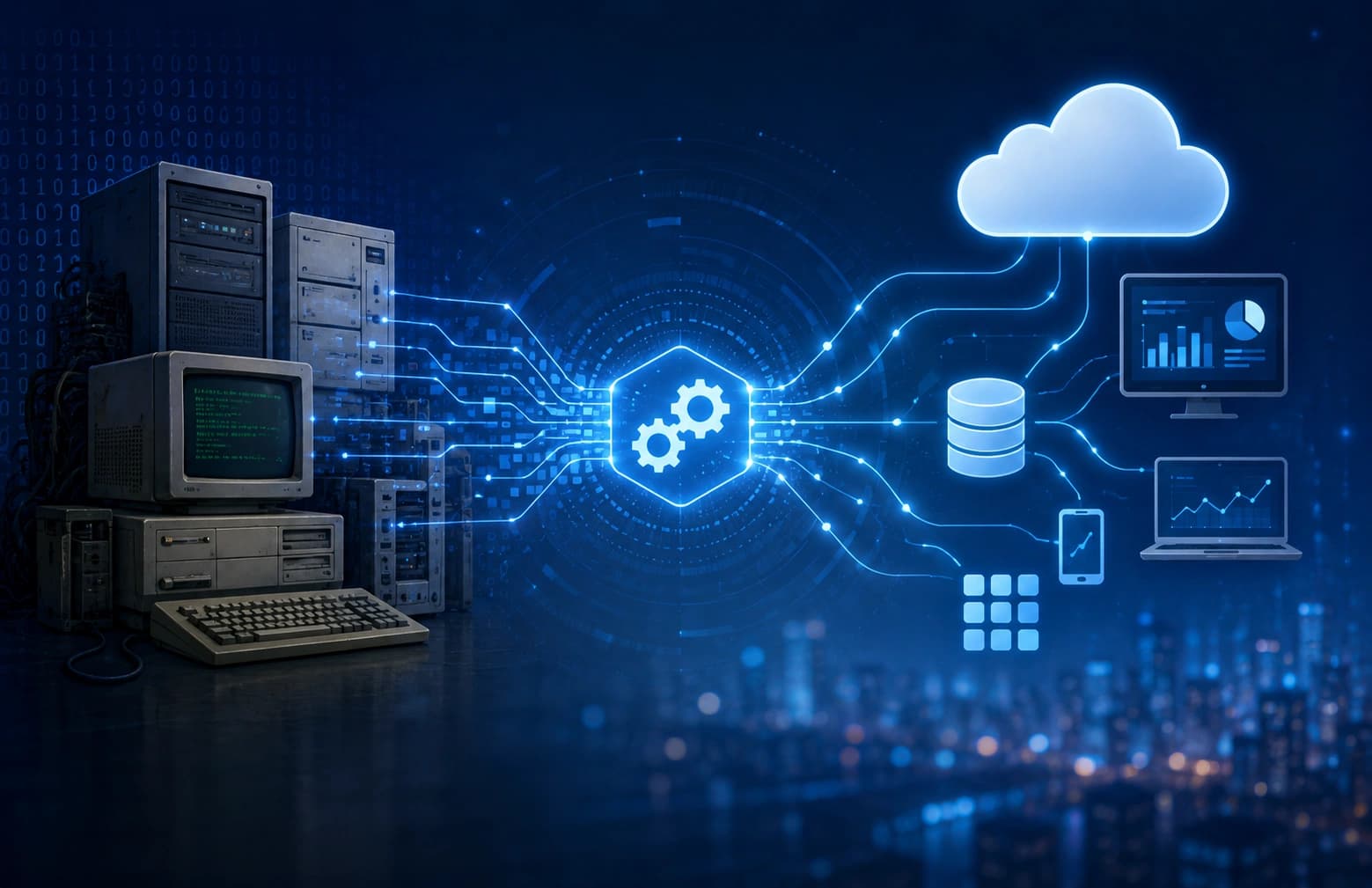
Traditional software built ten or twenty years ago still runs critical operations for thousands of established companies. Yet, as corporate strategy leans heavily into real-time operational data, automated customer touchpoints, and cloud analytics, implementing enterprise software integration creates immediate operational friction. Data gets stuck. Workflows stall. Tech budgets go toward fixing old code instead of launching new revenue channels. Solving this structural mismatch is essential for keeping your market position intact.
The Operational Friction of Legacy System Integration
Monolithic platforms were engineered for centralized, predictable workloads rather than modern web-scale demands. Connecting established core systems with cloud-native applications reveals several systemic operational friction points.
Operational Domain | Technical Failure Point | Enterprise Business Risk |
|---|---|---|
Data Silos | Transactional records remain trapped inside isolated database schemas | Executive reporting relies on delayed batch updates rather than live metrics |
Maintenance Drag | Budget allocations shift toward maintaining fragile, aging codebases | Slowed development velocity allows agile competitors to capture market share |
Workflow Friction | Operational teams execute manual data entry across disconnected interfaces | Processing bottlenecks increase human error and degrade service delivery |
Security Risk Profiles | Older architectures lack modern single sign-on and OAuth protocols | Heightened compliance risk during cross-boundary cloud data transfers |
Hidden Operational Costs and Resource Strain
Older systems often run on custom logic written by engineers who left the company years ago. Documentation is sparse or completely missing. When current teams try connecting those systems to new cloud apps, every change risks breaking hidden dependencies across other business units.
Delayed Decision-Making from Data Silos
When finance, logistics, and customer service platforms cannot communicate seamlessly, executive leadership receives a fragmented view of operations. Reconciling records across platforms manually introduces human error, slows reporting cycles, and forces key decisions to rely on outdated metrics.
Slower Adaptation to Market Shifts
Buyers notice when customer-facing portals cannot query inventory or account records in real time. Unintegrated systems become bottlenecks, turning small operational updates into complex, multi-month software overhauls.
Why is Enterprise Software Modernization a Strategic Priority?
Delaying system integration creates operational drag which will ultimately affect customer experience, employee productivity, and corporate enterprise valuation.
Recent data from McKinsey shows that software engineers working inside heavily clogged legacy environments spend their weekly working hours handling technical workarounds and system fixes.
To avoid the severe risks associated with total system replacement, forward-thinking leadership utilizes specialized software integration services to securely connect core data repositories with flexible cloud applications.
Methodologies: Connecting Legacy Infrastructure to Cloud Environments
Replacing operational core software outright presents unacceptable business continuity risk. Adopting an incremental modernization strategy enables organizations to deploy modern capabilities while protecting baseline business operations.
1. Build an API Gateway Layer
Instead of altering core code inside old software, engineers place a lightweight API layer over the top. This connector translates old data formats into clean formats that modern web apps understand instantly.
2. Incremental Module Migration (Strangler Fig Pattern)
Known as the "Strangler Fig" pattern, this approach shifts one business function at a time to the cloud. For instance, a company might move customer billing to a cloud app first while leaving inventory on the legacy backend until the new workflow runs smoothly.
3. Decoupling Communication Through Messaging Queues
By using asynchronous messaging systems like RabbitMQ or Apache Kafka, older databases are shielded from surges in demand. Backends are able to execute transactions at a sustainable speed without experiencing system timeouts because to these queues, which buffer incoming API calls.
When working through complex technical choices, getting guidance from seasoned software partners like Seasia helps ensure the operational data flows cleanly without disrupting everyday client transactions.
Strategic Architectural Patterns
To overcome historical limits, point-to-point connections must give way to flexible, decoupled solutions. Instead of undertaking high-risk, single-phase platform changes, effective firms use the Strangler Fig Pattern. This technique gradually replaces outdated components with microservices behind an API gateway, ensuring business continuity while reducing technological debt.
Key technical approaches driving system connectivity include:
API-First Architecture
Exposing core legacy logic through standardized API gateways allows modern mobile and cloud applications to access transactional data cleanly without disturbing underlying code.
Event-Driven Architecture (EDA)
Moving from scheduled batch routines to real-time event streaming via tools like Apache Kafka or RabbitMQ ensures data changes propagate instantly across the network.
Integration Platform as a Service (iPaaS)
Cloud-native iPaaS deployments consolidate API management, data mapping, and protocol transformation into a centralized interface, reducing development cycles.
Data Fabric & Virtualization
Constructing a unified logical data fabric allows teams to query distributed on-premises databases and cloud repositories simultaneously - bypassing massive, expensive data migrations.
Operational Outcomes of Enterprise Software Integration
When enterprise platforms communicate without friction, the impact shows up quickly across company balance sheets.
Reduced Administrative Labor
Automatic data transfers between systems eliminate double entry and expensive manual errors.
Faster Order Processing
Connecting fulfillment, sales, and accounting cuts processing times from days down to minutes.
Accurate Executive Dashboards
Leadership gets immediate access to true revenue figures, stock counts, and operating margins.
Smarter IT Spending
Shifting funds away from constant emergency fixes opens up capital for growth-focused software tools.
Implementing complete legacy system integration solutions for enterprises transforms static software into an agile ecosystem designed to operate at scale.
Governance and Risk Mitigation Approaches
Executive teams need straightforward governance rules that tie engineering efforts to clear business goals so that software projects stay on time and budget:
Target High-Impact Operational Bottlenecks
Modernize workflows that directly cause client friction or severe internal delays before addressing low-priority systems.
Define Value Through Operational Metrics
Evaluate project milestones using operational benchmarks such as transaction throughput or reduced ticket resolution times rather than code output alone.
Enforce Zero-Trust Security Protocols
Mandate end-to-end payload encryption, continuous monitoring, and strict identity governance across all exposed API endpoints.
Drive Organizational Change Management
Support operational staff with comprehensive process training well prior to system cutover dates.
Leveraging structured enterprise application integration frameworks allows leadership to modernize IT infrastructure systematically without compromising ongoing business execution.
Emerging Market Trends and AI Integration
Technological advancements over the past two years have fundamentally altered enterprise integration methodologies and system architectures.
Market analysis from Gartner projects global IT expenditure reaching $6.37 trillion, driven primarily by enterprise software growth and strategic infrastructure investments in artificial intelligence.
AI-Assisted Schema Mapping and Translation
Machine learning algorithms now scan historical data structures and develop mapping models for cloud endpoints, significantly shortening manual engineering discovery times.
Self-Healing Integration Pipelines
Modern enterprise integration solutions incorporate predictive monitoring models that continuously analyze payload health, dynamically adjusting rate limits and repairing data pipeline bottlenecks prior to service outages.
Unlocking Legacy Data for Enterprise AI Models
Connecting legacy transactional databases with retrieval-augmented generation (RAG) models enables organizations to execute natural language queries against decades of operational history to extract actionable business intelligence.
Implementing custom enterprise application integration services provides the structural foundation required to deploy advanced AI capabilities effectively. Working alongside experienced development groups such as Seasia gives leadership the technical depth needed to turn aging platforms into adaptable digital assets.
AI Orchestration, Observability, and Growth
Modern enterprise connectivity extends beyond moving static data between databases - it requires intelligent workflow orchestration. Layering artificial intelligence over operational platforms automates complex processes without forcing code rewrites. For example, global retail leaders like Walmart apply predictive AI models over legacy supply chain backends to analyze demand signals in real time and optimize fulfillment schedules.
AI implementation and proactive system management enhance performance across three operational areas:
Intelligent Process Automation
Generative models and AI agents convert unstructured inputs such as physical documents, invoices, or support threads into structured records that legacy ERP systems process automatically.
Integration Observability
Real-time monitoring engines evaluate API performance, track data pipeline flows, and flag latency anomalies before core operations stall.
Composable Scalability
Decoupling software modules allows business units to add or swap cloud capabilities rapidly without creating software friction.
Executing software modernization protects legacy capital investments while unlocking cloud capabilities. Working with a digital transformation partner like Seasia enables enterprises to deploy system integration solutions aligned with Zero Trust security models and compliance mandates. Custom application integration ensures legacy backends, cloud applications, and AI engines operate within a unified ecosystem.
Impact on Enterprise Value and Revenue Growth
Interconnecting isolated software applications directly influences corporate profitability, operating margins, and overall market valuation.
When systems work together, companies deliver products faster, handle higher transaction volumes without increasing headcount, and retain clients through better service experiences. Implementing reliable API integration for enterprise applications converts rigid backend tools into flexible platforms ready for market expansion.
Organizations that prioritize enterprise software integration establish a lasting competitive advantage over peers encumbered by disconnected legacy platforms.
Conclusion
To address software integration challenges, a balance must be maintained between operational stability and business innovation. Leadership can securely connect critical business systems with modern cloud apps through smart automation, secure middleware connections, and phased migration plans. Partnering with seasoned IT professionals like Seasia, businesses can reduce operational risk, safeguard their current investments, and promote long-term success.