
 Future of Work & Innovation
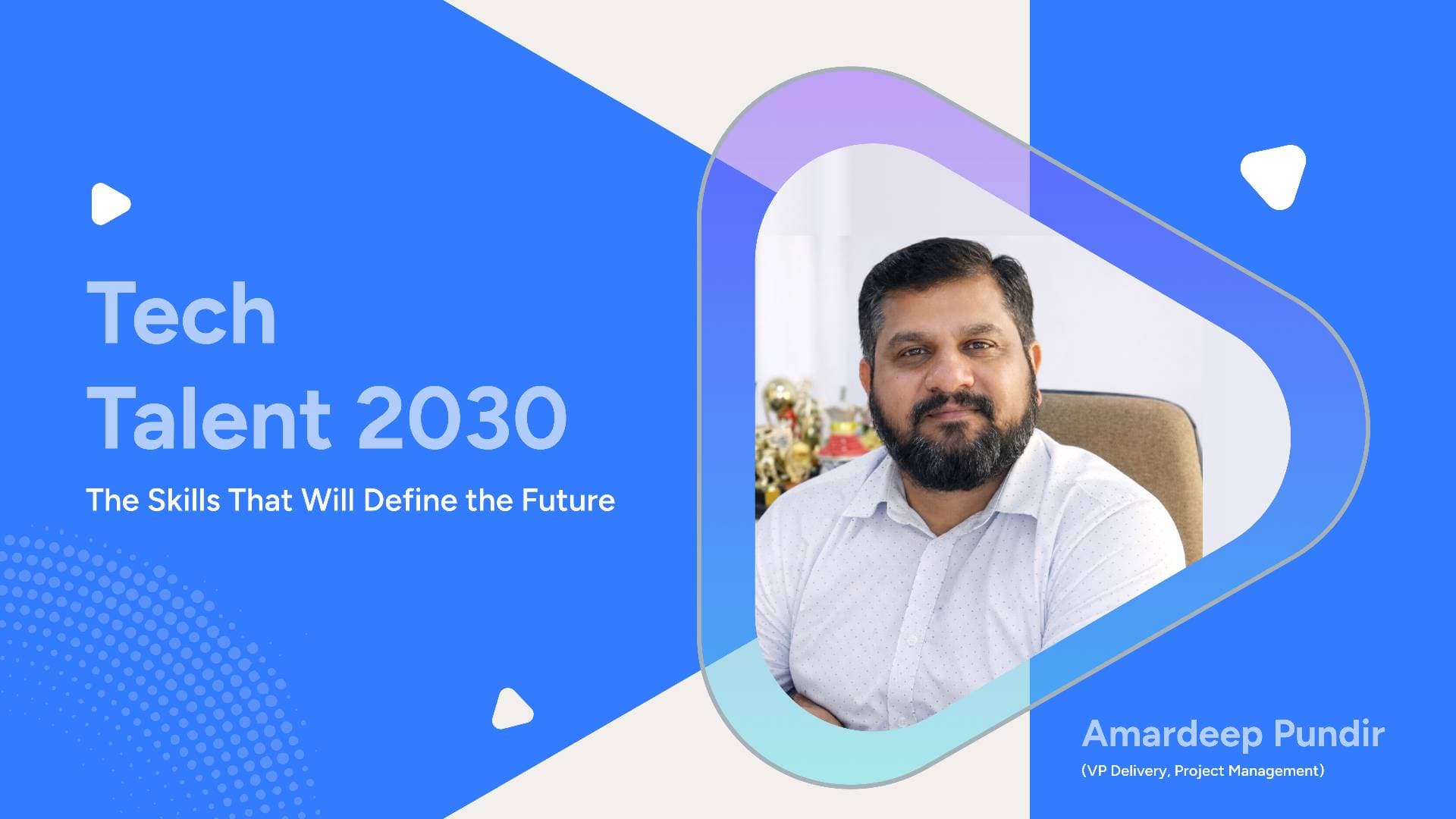
Tech Talent 2030: The Skills That Will Define the Future
Introduction — The Skills Gap Crisis
In today's fast-moving technology industry, a major skills gap is opening up at an unprecedented pace. The abilities companies need are changing faster than employees can learn them - creating a growing chasm between employer expectations and workforce capabilities.
76% of employees feel they don't have the right skills for the future - Amazon / Workplace Intelligence Study
By 2030, this gap will define the job market in ways we are only beginning to understand. It will no longer be enough to be an expert in just one domain. Instead, the most valuable technology professionals will be those who can understand and combine different areas of technology to build the products of tomorrow.
The New Brains of Technology: Artificial Intelligence
Artificial Intelligence (AI) is at the heart of this transformation. It is becoming the new operating system for technology - powering everything from our consumer apps to our enterprise business tools. The financial impact will be staggering.
US $1.01 Trillion projected global AI market size by 2031 - Statista
For technology workers, this means the real competitive advantage is no longer about knowing how to build an AI model from scratch. The genuine skill will lie in understanding how to:
Use AI effectively and ethically across business functions
Manage the quality and governance of the data AI systems depend on
Ensure AI systems work reliably, safely, and consistently at scale
Communicate AI capabilities and limitations to non-technical stakeholders
The professionals who treat AI as a tool to augment their work - rather than a threat to their role - will be the ones who lead the next generation of digital products and services.
Building on a Modern Foundation: The Cloud
Future technology needs a new foundation to be built upon, and that foundation is the cloud. Old monolithic ways of building software are rapidly being replaced by cloud-native approaches — using modern tools like containers, microservices, and serverless architectures to create applications that are flexible, scalable, and easy to update.
This trend is moving incredibly fast. Mastering cloud-native development is no longer a niche specialisation — it is becoming the baseline expectation for anyone who wants to create modern, resilient software. Key cloud competencies that will be essential by 2030 include:
95%+ of new digital projects will be built on cloud-native platforms by 2025 — Gartner Forecast
Container orchestration (Kubernetes, Docker)
Microservices architecture and API-first design
Serverless computing and event-driven systems
Multi-cloud and hybrid cloud strategy
Infrastructure-as-Code (Terraform, Pulumi)
Organisations that invest in cloud-native skills today will be positioned to move faster, scale more efficiently, and respond to market changes with greater agility than competitors still reliant on legacy infrastructure.
Security is Everyone's Job
With all this new technology comes new and more sophisticated risks. As we connect more of our world to the internet — from smart devices to critical infrastructure — the danger from cyberattacks grows exponentially. The financial consequences are severe.
$4.9 Million average cost of a data breach in the latest report — IBM Cost of a Data Breach Report
These numbers make one thing very clear: security can no longer be left to a small, siloed team of specialists working in isolation. By 2030, every person working in technology must think about security from the very first line of code they write. Building safe and secure products has to be a core part of everyone's job — not an afterthought.
This 'security-first' mindset requires tech professionals to develop competency in areas such as:
Secure coding practices and vulnerability assessment
Identity and access management (IAM) principles
Data privacy regulations (GDPR, CCPA) and compliance
Threat modelling from the design phase
Incident response planning and cyber resilience
The shift from 'security as a department' to 'security as a culture' will define which organisations can be trusted — and which ones become the next data breach headline.
The Human Skills That Make the Difference
Ultimately, all the technical knowledge in the world will be insufficient without the right human skills to support and amplify it. The World Economic Forum, in its Future of Jobs reports, consistently highlights that uniquely human capabilities will become more — not less — valuable as automation increases.
"Analytical and creative thinking are the most critical skills for the future workforce." — Amandeep Pundir , Delivery Head at Seasia
The ability to solve complex, ambiguous problems - those that do not have a clear answer in a textbook - is what will separate good tech professionals from truly great ones. Alongside this, the following human skills are rising in strategic importance:
Critical and analytical thinking : evaluating information to make sound decisions
Creative problem solving : generating novel solutions to unique challenges
Clear communication : translating technical complexity for non-technical audiences
Collaboration : working effectively across disciplines, time zones, and cultures
Intellectual curiosity : staying genuinely interested in learning and exploration
These are the skills that allow us to use technology to create real, lasting value — for people, for businesses, and for society. No AI will replace a professional who combines deep technical skill with exceptional human judgment.
The New Rule: Always Be Learning
Given how rapidly everything is evolving, the single most important meta-skill of all will be the ability to learn — quickly, continuously, and with purpose. The technologies you master today could become outdated within just a few years. The competitive advantage will belong to those who can unlearn, relearn, and adapt faster than their peers.
1 Billion people will need to be reskilled to keep pace with technological change by 2030 — World Economic Forum
A commitment to continuous learning is no longer optional — it is the fundamental prerequisite for a sustainable long-term career in technology. The professionals who thrive in 2030 and beyond will share these habits:
Dedicating regular time each week to structured learning and skill development
Building personal learning systems — courses, books, communities, mentors
Seeking out projects that stretch capabilities beyond their current comfort zone
Staying connected to emerging technology trends through industry networks
Treating failure and experimentation as essential parts of the learning process
The 'Always Be Learning' mindset is not just a career strategy — it is a professional obligation. Those who embed lifelong learning into their daily habits will not just survive the technology revolution; they will lead it.
Conclusion & Key Takeaways
The technology workforce of 2030 will look fundamentally different from today. The skills gap is real, it is growing, and it will reward those who act proactively. Five pillars will define the future-ready tech professional:
AI Literacy — understanding and applying AI effectively, ethically, and reliably
Cloud-Native Mastery — building on the modern foundation that enables speed and scale
Security Mindset — making safety a first-class concern, not an afterthought
Human Skills — critical thinking, creativity, and communication that no machine can replicate
Continuous Learning — the meta-skill that makes all other skills sustainable over time
The window to prepare is open — but it will not remain open indefinitely. The professionals and organisations that invest in these five pillars today will be the ones shaping the technology landscape of tomorrow.
Related Articles
_(1).webp&w=828&q=75)
Why EdTech’s Next Decade Will Be Built on AI, Blockchain, and Micro-Credentials
EdTech is shifting from simple content delivery to intelligent learning ecosystems. Explore how AI-powered personalization, blockchain-verified credentials, and micro-credentials are defining the next decade of education technology.

The Hidden Environmental Cost of Artificial Intelligence
AI may feel effortless to users, but every query depends on energy, cooling and infrastructure. This article explores why the AI industry must make sustainability part of innovation.

The Rise of Autonomous SDLC: How AI Agents Are Redefining Software Delivery
Discover how Autonomous SDLC is reshaping software engineering with AI agents that automate development, testing, deployment, and governance while empowering teams to build better software faster.