The global electric scooter and motorcycle market is projected to reach $49.36 billion by 2030, growing at a 14.2% CAGR. That momentum is one of the clearest signals that micromobility is no longer a niche urban experiment, it is now a serious digital mobility category for startups, fleet operators, and smart city ecosystems.
If you are planning e-scooter app development, the opportunity is real, but so is the competition. In 2026, success depends on more than QR unlocks and payments. The winning platforms combine rider experience, IoT telemetry, AI-powered fleet decisions, compliance tooling, and multi-modal mobility integrations.
In this guide, we break down how to build an e-scooter app, what it costs, which features matter most, and what tech stack makes sense in 2026. Our team at Seasia Infotech has hands-on experience with mobile app development, IoT integration, and AI/ML services for mobility platforms.
How Much Does E-Scooter App Development Cost in 2026?
For most buyers, this is the first question that matters.
The cost of building an e-scooter app depends on the scope, number of apps, level of IoT integration, AI capability, compliance requirements, and whether you need a white-label product or a custom platform from scratch.
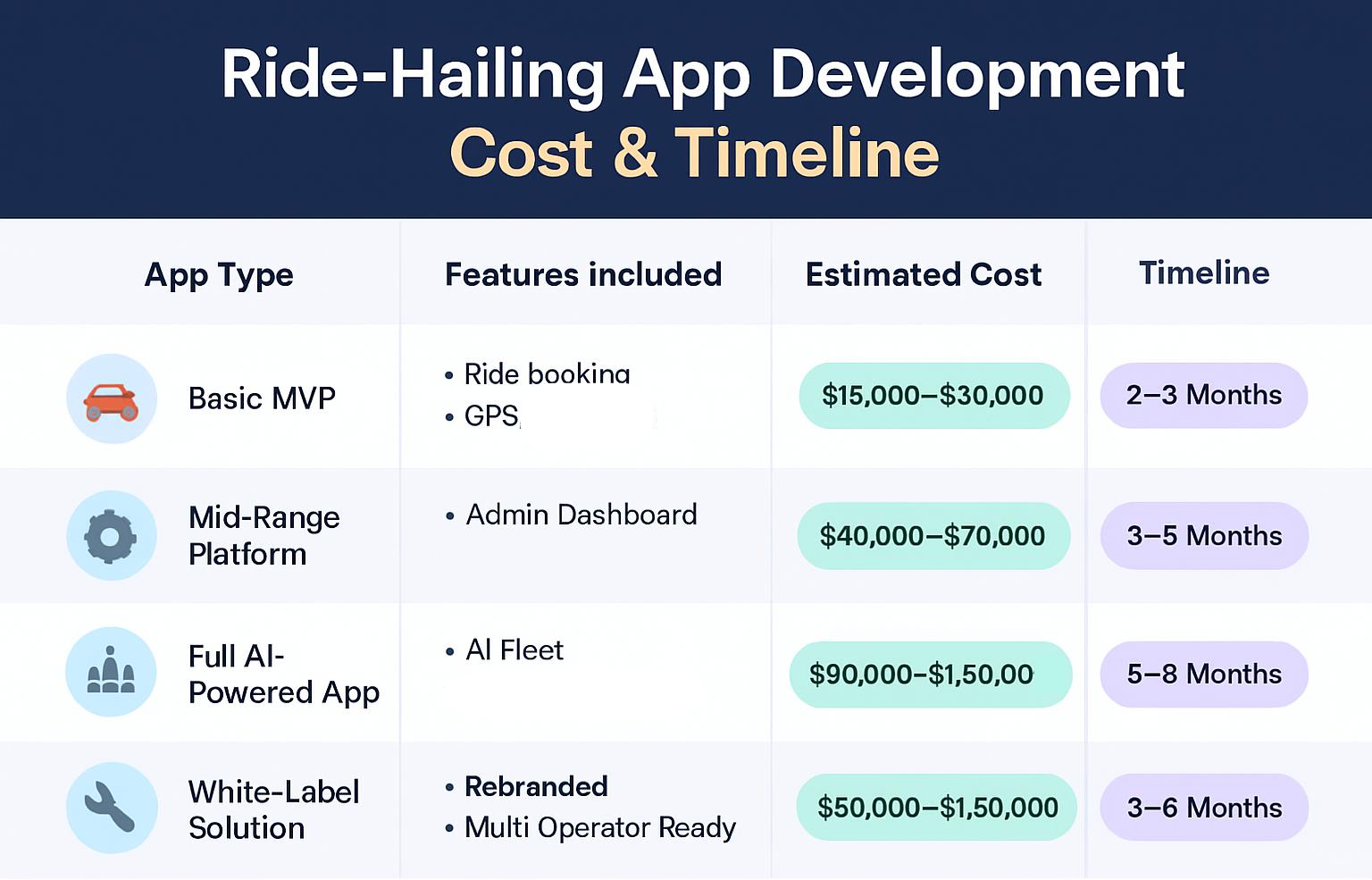
If your goal is to test the market quickly, a focused MVP is the right start. If you are targeting enterprise fleet operations or smart city partnerships, the architecture must be planned for scale from day one.
What Types of E-Scooter Apps Can You Build?
Earlier, this used to be a single app category, but the market is broader now.
Rental / Sharing App
This is the classic scooter sharing app like Lime model. It includes rider onboarding, map-based scooter discovery, ride start/stop, wallet integration, pricing, and geofencing. Our Cross-platform mobile app development team builds these end to end.
Personal Scooter Companion App
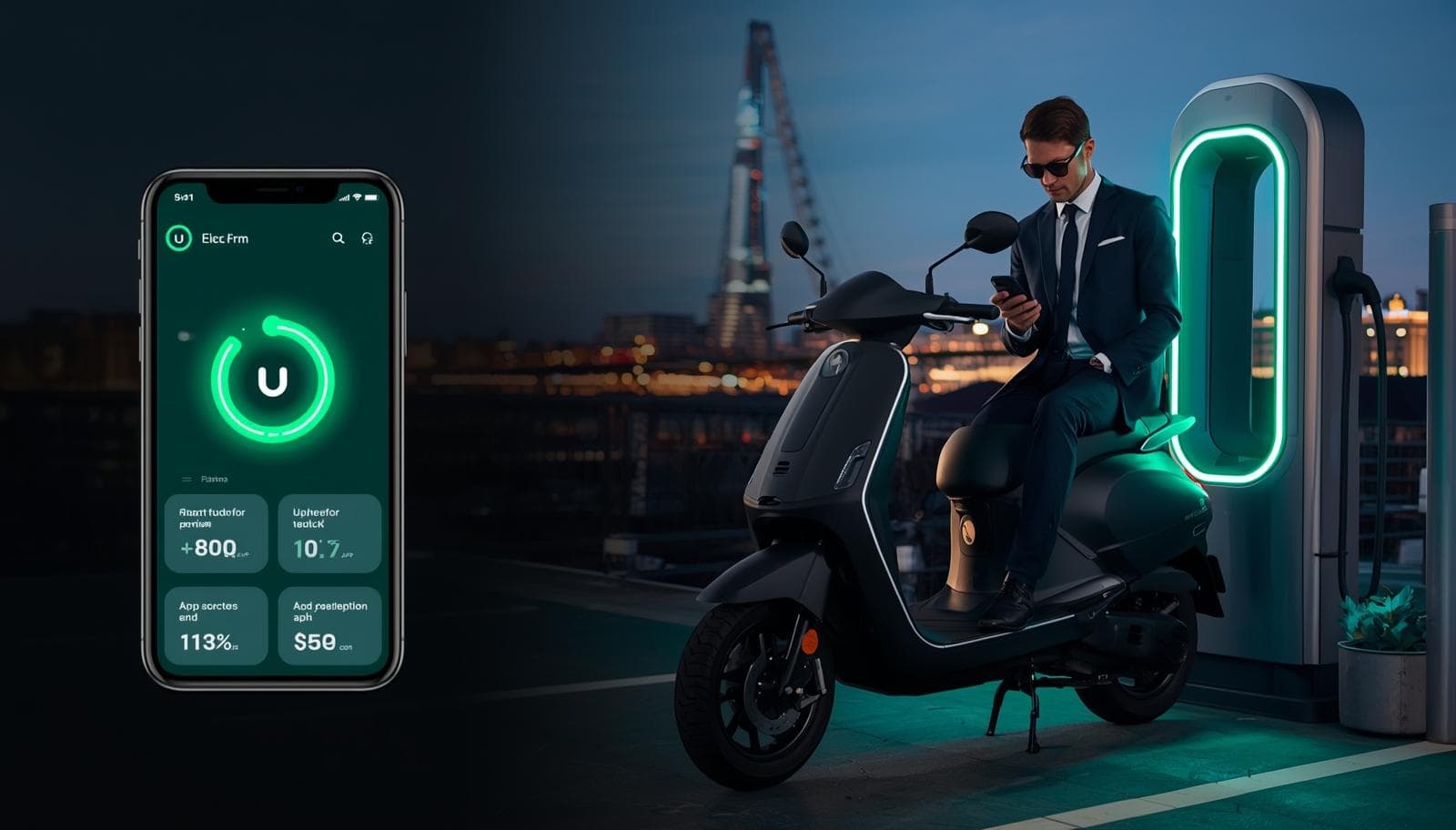
This model is built for direct-to-consumer EV brands and private scooter owners. The app acts as a control center for battery status, ride history, firmware updates, anti-theft alerts, and diagnostics. See our electric vehicle software expertise for this category.
Fleet Management Dashboard
This is where operational value is created. Operators need a command layer for availability, low-battery units, utilization patterns, maintenance triggers, field staff assignments, and zone-based reporting. Our Betterfleet portfolio case study shows how we approach fleet management platform development.
White-Label Platform
Ideal for startups and regional operators entering new geographies. A white-label system reduces time-to-market while allowing brand customization, city-specific rules, and multi-operator deployment logic. This typically Involves microservices architecture for flexibility.
App Type | Target Audience | Key Feature |
|---|---|---|
Rental/Sharing App | Fleet operators (Lime model) | QR unlock, pay-per-ride, geofencing |
Personal Scooter Companion App | Individual scooter owners | Battery monitor, ride stats, anti-theft |
Fleet Management Dashboard | B2B operators & city admins | Real-time fleet view, revenue reports |
White-Label Platform | Startups entering new markets | Fully rebrandable, multi-city ready |
Core Features Every Scooter Rental App Needs
Whether you are building an MVP or a large-scale micromobility platform, these are the non-negotiables. Our UI/UX design team ensures every features delivers an intuitive rider experience.
Rider App Features
User registration and KYC
Interactive map with live scooter availability
QR code unlock
Ride scheduling or reservation
Real-time GPS route tracking
Wallet, cards, Apple Pay, Google Pay
Ride pause, end trip, and lock controls
Fare estimates and trip history
In-app support and issue reporting
Safety tutorials and ride rules
Admin / Operator Features
Fleet overview dashboard
Battery and location monitoring
Scooter health status
Pricing and zone management
User management and fraud controls
Support ticket workflows
Ride heatmaps and utilization analytics ( Powered by our data analytics & BI) capabilities
Maintenance scheduling
Compliance and reporting exports
Field Operations Features
Damaged vehicle detection workflows
Rebalancing task assignments
Charging or battery swap routing
Incident photo capture
Warehouse and repair logs
This is also where scooter app with GPS tracking becomes a serious business feature, not just a rider convenience layer.
AI Features for E-Scooter Apps
In 2026, AI is no longer optional for operators that want better margins, safer rides, and more predictable fleet utilization. Our Artificial Intelligence consulting team implements these capabilities into production-grade mobility platforms.
AI-Powered Demand Forecasting
Demand forecasting models can predict where scooters will be needed based on time of day, weekday patterns, weather, nearby events, and historical booking density. That reduces idle inventory and improves rider availability. Built using our predictive analytics services .
Dynamic Pricing Engine
Pricing can be adjusted using demand, low-supply zones, event traffic, weather signals, and local usage spikes. This is especially useful in dense urban corridors and during peak commute hours.
Fleet optimization using machine learning
ML models can suggest where scooters should be moved, charged, or pulled for maintenance. This directly impacts ride completion rate and revenue per scooter. Our ai/ml services team designs these pipelines using python-based ML frameworks .
Predictive Maintenance Alerts
When IoT telemetry is paired with usage and fault history, the system can flag units likely to fail soon. That reduces downtime and avoids expensive emergency repairs.
Rider Behavior Analytics
Unsafe acceleration, abrupt braking, sidewalk riding signals, repeated geofence violations, and abnormal trip patterns can be tracked to support safety, compliance, and fraud prevention.
Computer vision for parking violation detection
Images captured at ride end can be checked for sidewalk obstruction, improper parking, or out-of-zone parking. Computer vision is already being used in traffic and helmet-detection workflows, and related research shows strong applicability for automated safety and compliance checks.
IoT Integration in Scooter Apps
If you are serious about IoT integration in scooter apps, think beyond GPS pins on a map.
A modern platform should ingest device-level telemetry such as:
Battery level and battery temperature
Motor health indicators
Tilt and motion events
Lock/unlock state
Speed data
Crash or fall detection
Controller faults
Charging status
Firmware version
IoT connectivity allows operators to use onboard and remote diagnostics for predictive maintenance and better fleet lifespan management. Research and industry guidance both point to IoT-based monitoring as a strong foundation for predictive maintenance workflows.
Practical IoT use cases include real-time diagnostics, battery health tracking and swap decisions, theft alerts and movement anomalies, preventive maintenance scheduling, remote immobilization, and firmware updates over the air.
For any fleet management app for electric scooters, this telemetry layer is what separates a real product from a map-and-payment app.
Multi-Modal Mobility Integration
Cities increasingly want micromobility platforms to work alongside public transport rather than outside it.
Integration opportunities
Google Maps Routes / Transit APIs for route planning with public transport legs ( handled via our API-first development approach)
City transit APIs such as TfL Unified API and MTA real-time feeds for disruptions, arrivals, and planning logic
unified mobility wallets for bus, metro, bike, and scooter access
fallback ride suggestions when rail or bus routes are disrupted
Why This Matters
A rider opening your app should be able to see that a metro line is delayed and immediately get a scooter recommendation for the last-mile trip. That is the shift from a scooter app to a true multi-modal digital transfration strategy.
Smart City Compliance Features
Compliance requirements vary by city, but the direction is clear: operators are expected to prove safer operations, parking discipline, and reliable data reporting. Cities and regulators increasingly emphasize data sharing, geofencing, parking control, age or rider verification, and operator accountability.
Compliance features to build in are:
Geofencing for no-ride, no-parking, and slow-speed zones
Designated parking zone enforcement
Rider ID verification
Safety acknowledgment and policy acceptance
Helmet detection or helmet compliance workflows where relevant
Real-time city reporting dashboards
Incident logs and audit trails
Parking image submission plus GPS validation
Traffic management data exports
New York City’s pilot conditions required operators to share system data, support age verification, and enforce mandatory parking corrals in some areas. Los Angeles permit frameworks also include data and operational reporting requirements.
That means a smart city scooter app now needs compliance by design, not as an afterthought.
Layer | Recommended Technologies | Primary Purpose |
Mobile App | React Native 0.73+ or Flutter 3.x | Cross-platform app development with modern UI performance and faster deployment across iOS and Android |
Backend | Node.js 20+, NestJS, Express | Scalable real-time APIs, business logic, authentication, payments, ride orchestration, and admin services |
Database | PostgreSQL, Redis, TimescaleDB | Transactional data storage, caching/session management, and telemetry/time-series data handling |
Infrastructure | AWS / Azure / GCP, containerized services or serverless architecture, GitHub Actions / GitLab CI | Cloud hosting, scalability, deployment automation, monitoring, and CI/CD pipelines |
Maps & Mobility APIs | Google Maps Platform, city transit APIs, geofencing and route optimization services | Live scooter tracking, route planning, zone enforcement, transit integration, and mobility intelligence |
AI / Analytics | Python-based AI services, ML pipelines, computer vision models | Demand forecasting, dynamic pricing, predictive maintenance, rider behavior analytics, and parking/safety validation |
How Long Does Development Take?
A realistic timeline looks like this:
Basic MVP: 2–3 months
Best for startups validating unit economics, rider adoption, and operational assumptions. Our mobile app development team can deliver a production-ready MVP efficiency.
Mid-Range Platform: 3–5 months
Suitable when you need rider app, operator panel, IoT data ingestion, and basic analytics.
Full AI-powered platform: 5–8 months
Required when you want multi-city rollouts, predictive maintenance, demand forecasting, smart pricing, and transit integration. Our solution architecture team designs this from day one for scale.
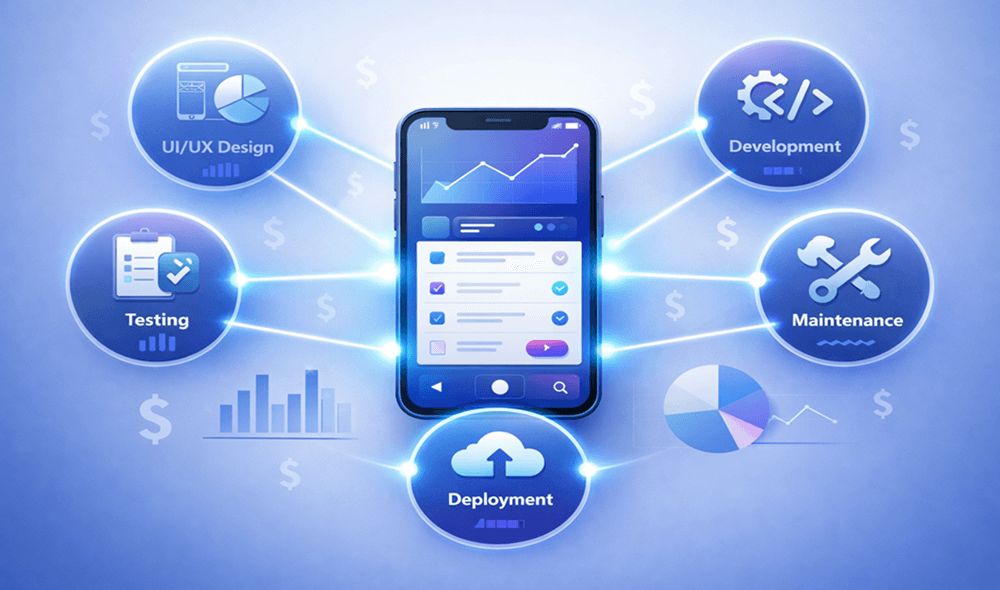
Typical delivery phases include discovery and scope definition, UX/UI design, backend and mobile development, IoT integration, QA and real-device testing, and deployment and post-launch optimization.
Why Partner With Seasia Infotech?
At Seasia Infotech, we build mobility platforms with a product-first lens.
Our engineering teams help clients move from MVP to scale with cross-platform mobile app development, real-time backend architecture, IoT integrations, AI/ML implementation, compliance-aware system design, scalable admin dashboards, and analytics and optimization workflows.
Whether you need e-scooter startup app development, a fleet management app for electric scooters, or a full white-label micromobility platform, the goal is the same: launch fast, operate efficiently, and scale with confidence.