For many businesses, the first wave of enterprise AI systems started with a single model doing a single job: answering questions, summarizing documents, or assisting a team with routine tasks. That phase was useful, but it also exposed a hard truth. One model, no matter how capable, starts to struggle when the workflow spans departments, tools, approvals, data boundaries, and real business consequences.
That is why multiagent systems are becoming a serious part of AI architecture trends in 2026. Enterprise leaders are moving beyond standalone copilots and toward intelligent AI systems made up of specialized agents that can plan, delegate, execute, validate, and escalate across workflows. Google Cloud’s 2026 guidance frames this shift as a move from chatbots to AI agents that automate complex workflows, while Microsoft’s architecture guidance now focuses heavily on multi-agent orchestration patterns for enterprise use cases.
What are multiagent systems?
Multiagent systems are AI environments where multiple autonomous agents operate in a shared context, each handling a distinct role while coordinating toward a larger goal. Instead of relying on one general-purpose AI assistant to do everything, businesses create an ecosystem of specialized agents: one may retrieve data, another may analyze risk, another may generate a response, and another may enforce policy or route the task to a human reviewer. It is multiple autonomous, interacting agents working in a shared environment with distributed control and decision-making.
In practical business terms, multiagent systems in AI are less about “more bots” and more about better operating design. They introduce role clarity into AI workflow automation. A planner agent can break down the task, specialist agents can complete domain-specific work, an orchestration layer can manage sequence and state, and a governance layer can decide what needs approval. That is a far more enterprise-ready structure than asking one model to reason through everything in one pass.
AI Systems vs AI Agents vs Multiagent Systems
A lot of confusion in the market comes from using these terms interchangeably, when they are not the same.
AI systems are the broadest category. They can include models, workflows, rules, integrations, dashboards, memory layers, and governance controls.
AI agents are more autonomous components inside that system. Anthropic defines agents as models that direct their own processes and tool use to accomplish a task, operating in a loop of planning, acting, observing, and adjusting rather than following a fixed script.
Multiagent systems go one step further. They combine multiple agents with distinct responsibilities inside one orchestrated workflow. They can be described as two or more agents for distinct tasks within a single business process, with specialization, orchestration, and explicit state management between components.
That distinction matters. The debate is no longer just AI systems vs AI agents. The real strategic question is this: when does your business need a single capable agent, and when does it need a coordinated AI ecosystem?
Why Businesses Are Moving Beyond Single AI
Single-agent setups work well for bounded tasks. If the job is summarization, document drafting, FAQ support, or straightforward retrieval, a single agent may be enough. In fact, Microsoft explicitly warns that multi-agent architecture introduces latency at every handoff and requires more state management, so it should not be treated as the default answer for every use case.
But enterprise reality is rarely that simple.
A procurement workflow touches policy, vendor data, contract review, approval logic, ERP integration, and compliance controls. A customer support resolution may require billing context, product knowledge, sentiment handling, refund logic, and human escalation. A sales operations workflow may involve CRM updates, pricing validation, proposal generation, risk scoring, and legal review. These are not single-task interactions. They are orchestrated business processes.
That is where multiagent systems start making sense. Businesses adopt them when they need separation across security boundaries, collaboration across teams, or a modular architecture that can grow without collapsing into one massive, brittle prompt stack. Microsoft specifically highlights those triggers: compliance separation, multiple teams or knowledge domains, and planned future expansion across functions.
How Multiagent Systems Work in Enterprise Environments
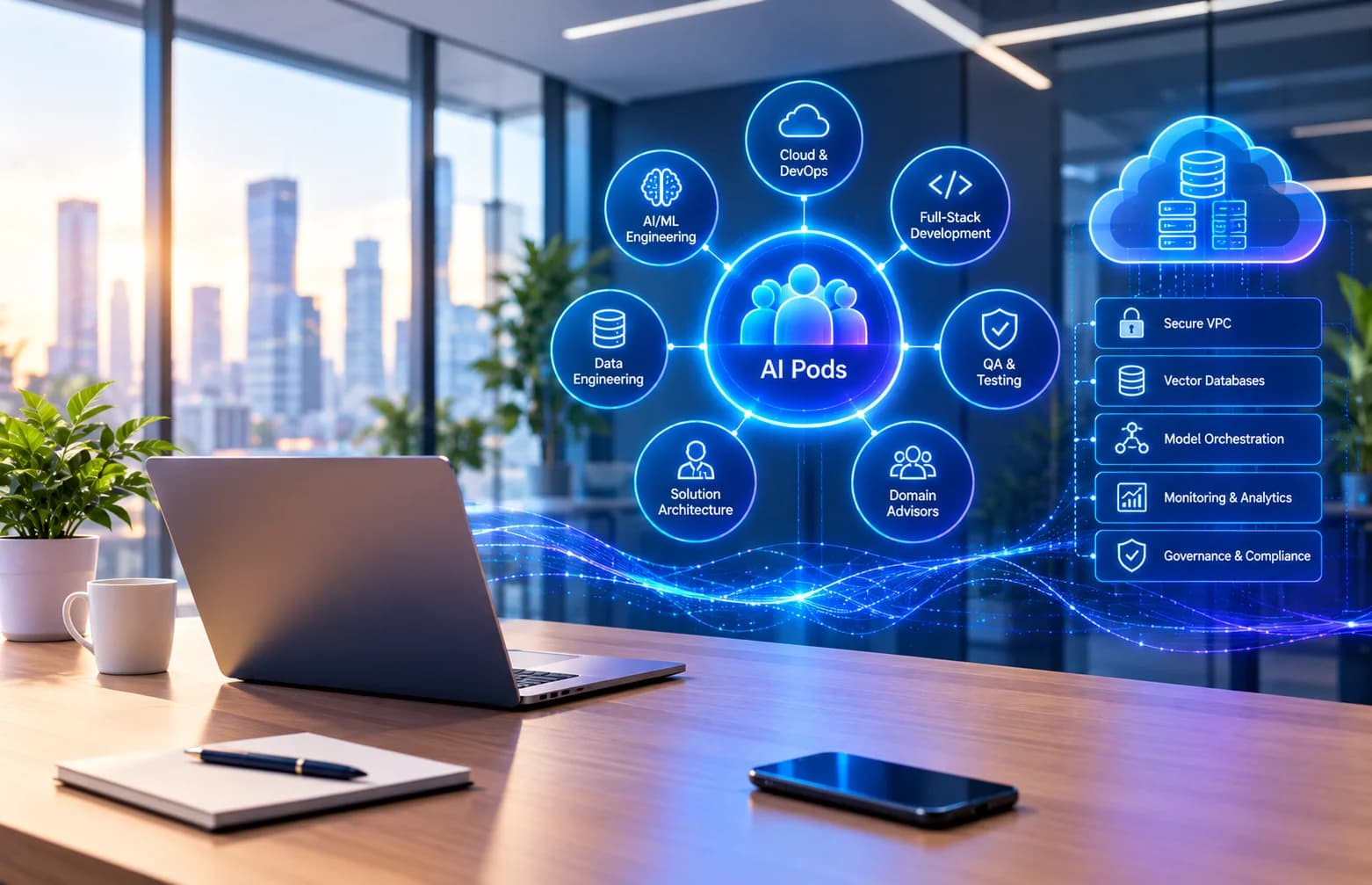
At a high level, multiagent systems in AI usually include five layers:
1. The planner or orchestrator
This layer receives the business objective and determines which agents should act, in what order, and under what conditions.
2. Specialist agents
Each agent is assigned a narrow responsibility. One may handle retrieval. Another may validate policy. Another may transform outputs into business-ready actions.
3. Shared context and state
Agents need structured memory, not just raw conversation history. State management preserves continuity across handoffs and helps maintain integrity throughout the workflow. Microsoft emphasizes this as a core requirement for reliable multi-agent workflows.
4. Tool and system access
Agents do not create business value in isolation. They need controlled access to CRMs, ERPs, ticketing tools, knowledge bases, APIs, files, and analytics systems.
5. Governance and human oversight
As agents become more autonomous, governance becomes non-negotiable. The rise of agents creates a new frontier for governance because these systems can act across files, tools, and applications with less direct human oversight.
This is why mature enterprise AI systems are beginning to look less like chatbot deployments and more like digital operating models.
Common Orchestration Patterns Businesses Are Using
One reason multi-agent systems are gaining traction is that orchestration is becoming more structured. Several patterns that are directly useful for enterprise AI orchestration systems include.
Sequential orchestration
This is best for workflows with clear dependencies. One agent drafts, another reviews, another validates, and another finalizes. It is effective for legal workflows, policy checks, claims processing, and regulated content generation. This is a predefined linear chain suited to multistage processes and progressive refinement.
Concurrent orchestration
This pattern runs multiple agents in parallel and then combines the results. It is useful when the business needs multiple perspectives quickly, such as technical, commercial, risk, and compliance analysis happening at the same time. This reduces runtime and improves coverage when tasks are parallelizable.
Handoff and escalation
Some tasks should move from one specialist to another based on rules, risk thresholds, or confidence levels. This is especially useful in support, finance, and internal operations.
Human-in-the-loop checkpoints
Not every action should be autonomous. Approval gates for refunds, legal clauses, policy exceptions, or sensitive transactions keep the system practical and trustworthy. Microsoft recommends checkpointing state at these approval steps so workflows can resume cleanly without replaying everything.
Where Multiagent Systems Create the Most Business Value
The strongest use cases are not gimmicky. They are process-heavy, cross-functional, and expensive when handled manually.
Customer support and service operations
Instead of one assistant trying to do everything, businesses can deploy an intake agent, a documentation agent, a billing agent, a resolution agent, and an escalation agent. Google explicitly points to customer service as a strong fit for multi-agent systems, where agents can track issues, recommend fixes, handle billing adjustments, and personalize responses.
Finance and procurement
Agents can collect documents, classify spend, validate policy, flag anomalies, and route cases for approval. This reduces repetitive work while preserving control.
Sales and revenue operations
One agent qualifies incoming opportunities, another enriches accounts, another drafts proposals, and another checks commercial guardrails before anything reaches the customer.
Compliance-heavy document workflows
In industries like healthcare, BFSI, insurance, and legal, one agent should not be responsible for every decision. Separation of duties is often a feature, not a bug.
Software and IT operations
Anthropic’s own engineering write-up on its multi-agent research system shows how a lead agent can plan work and spin up parallel agents to search for information simultaneously, which is a strong pattern for research, analysis, incident support, and technical operations.
The Real Advantages of Intelligent AI Systems
The biggest advantage of multiagent systems is not just automation. It is operational design.
They improve specialization because each agent is focused on a narrower task.
They improve scalability because capabilities can be expanded without rebuilding the entire system.
They improve resilience because failures in one component do not have to collapse the full workflow.
They improve governance because access, approvals, and responsibilities can be separated more cleanly.
They improve maintainability because teams can update individual agents without rewriting the whole intelligence layer.
That is why the future of AI in business is increasingly about ecosystems rather than isolated assistants. The winning architecture is not “one smarter model.” It is a better-coordinated system.
The Challenges Businesses Should Not Ignore
This shift is powerful, but it is not frictionless.
Multiagent systems can create unnecessary complexity when companies add agents without clear specialization. Microsoft specifically warns against overcomplicating workflows, overlooking handoff latency, sharing mutable state carelessly, and burning excessive model resources as context accumulates.
They also increase governance pressure. Anthropic highlights risks such as misinterpreting user intent, taking unintended actions, and exposure to prompt-injection-style attacks as agents gain more autonomy.
So, the enterprise question is not whether multiagent systems are promising. They are. The question is whether they are being architected with the same rigor businesses would expect from any production-grade distributed system.
That means:
Clear roles for every agent
Defined handoff logic
Scoped permissions
Testable interfaces
Observability across the full workflow
Approval checkpoints for sensitive actions
Evaluation tied to business outcomes, not demo quality
When a single agent is still the better choice
Not every workflow needs an intelligent AI ecosystem.
If the process is narrow, deterministic, low risk, and mostly contained within one tool or one knowledge domain, a single agent is often the smarter choice. Microsoft’s guidance is clear here: organizations should not default to multi-agent architecture unless separation is genuinely required.
This is an important point for enterprise decision-makers. The goal is not to chase complexity. The goal is to build the simplest architecture that can reliably deliver value today and scale tomorrow.
That is where experienced AI engineering partners matter. A strong implementation team will not force multiagent systems into every use case. It will identify where orchestration creates leverage and where a simpler agent-first workflow is enough.
AI Architecture Trends 2026: What Comes Next

The market direction is becoming easier to read.
Enterprise AI is moving:
From chat interfaces to action-oriented systems
From general assistants to specialized agents
From isolated agents to orchestrated workflows
From experimentation to governed deployment
From one-off AI use cases to composable enterprise AI systems
Google’s 2026 enterprise messaging is centered on agents as a competitive advantage for automating complex workflows, especially across internal business functions. Microsoft’s architecture content is becoming more explicit about orchestration models, state, testing, and human oversight. Anthropic’s 2026 research direction reinforces the same point from another angle: as agents become more capable, governance, transparency, and control become part of the architecture itself.
In other words, the future of AI in business is not just smarter outputs. It is better system design.
Where Seasia Fits into This Shift
For enterprises, the opportunity is not merely to deploy AI agents. It is to build AI workflow automation that is secure, scalable, and aligned with real operating models.
That is where Seasia’s engineering-led approach becomes relevant. Moving from single AI to intelligent AI systems requires more than model integration. It demands workflow architecture, API strategy, system interoperability, governance controls, cloud readiness, and product thinking. The businesses that get this right will not simply “use AI.” They will operationalize it across the enterprise.
Whether the use case begins with support automation, internal operations, compliance workflows, or cross-functional decision support, the underlying requirement stays the same: build an AI ecosystem that reflects how the business actually works.
Final Thoughts
So, what are multiagent systems really changing?
They are changing how businesses think about AI maturity.
The first phase of enterprise AI was about assistance. The next phase is about coordination. Businesses are realizing that real value comes when AI can operate across roles, systems, decisions, and workflows without becoming chaotic or ungovernable.
That is why multiagent systems are emerging as one of the most important AI architecture trends 2026.
The organizations that move early, but architect carefully, will be the ones that turn AI from an interesting capability into real business infrastructure.