US enterprises lose $370 million per year on average due to legacy technical debt. Legacy systems consume 58-80% of total IT budgets, leaving only 20-42% for innovation. And nearly 60% of AI leaders say legacy integration is one of their biggest barriers to deploying AI agents.
You're not behind on AI because of strategy. You're behind because of the infrastructure. Pegasystems/Savanta research puts the average annual technical debt waste at more than $370 million per enterprise, while Deloitte identifies legacy integration as a major obstacle for agentic AI adoption.
Here’s a breakdown of what legacy system modernization with AI agents actually looks like in 2026, which industries are moving fastest, what it costs, and how Seasia helps US enterprises modernize without risking business continuity.
Why 2026 Is the Breaking Point for US Legacy Systems
For years, legacy modernization sat in the “important but not urgent” category. Systems were old, expensive, and difficult to change, but they still worked.
That logic is breaking down in 2026.
US enterprises are now facing three pressures at the same time: retiring legacy talent, rising security exposure, and AI initiatives that cannot move beyond pilot because the core systems were never designed for real-time, API-first operations.
1. The talent cliff is getting real
Many enterprise systems still depend on COBOL, mainframes, older ERP customizations, or undocumented business logic built 15-30 years ago. The problem is not only the language. It is the institutional memory around it.
When the few people who understand the system retire, the business does not just lose developers. It loses the logic behind billing rules, claims workflows, settlement processes, pricing calculations, compliance exceptions, and operational workarounds.
That is why the cost of legacy systems in 2026 is not limited to maintenance. It includes slower releases, dependency risk, fragile integrations, and the premium paid for specialist contractors who can safely touch aging code.
2. Security costs are no longer optional
Legacy systems were rarely designed for today’s zero-trust, API security, identity governance, and auditability requirements. Patching them is possible, but expensive.
IBM’s 2025 breach report puts the global average cost of a data breach at $4.4 million and shows that organizations using security AI and automation extensively saved $1.9 million compared with those that did not.
For enterprises with unmodernized systems, the risk is compounded. Older systems often lack granular access controls, real-time monitoring, encryption standards, centralized logging, and clean audit trails. That makes cyber insurance harder, compliance reviews slower, and breach response more expensive.
3. AI adoption is blocked by infrastructure
AI agents need real-time context. Legacy systems usually run on batch processing, nightly exports, flat files, rigid workflows, and disconnected databases.
That gap matters.
Deloitte notes that agentic AI performs best in dynamic, connected environments, but many enterprises still depend on rigid legacy infrastructure that makes it difficult for autonomous agents to plug in, adapt, and orchestrate processes. Deloitte also highlights platform modernization, API-driven integration, and process re-engineering as necessary steps for agentic AI adoption.
In plain terms: AI agents cannot deliver business value if they cannot securely access the systems where business actually happens.
Rewrite vs Modernize vs AI Agent Wrapper - The 2026 Decision Framework
Most CIOs and CTOs are no longer asking, “Should we modernize?”
They are asking: “How far do we go, how much do we spend, and how do we avoid breaking what already runs the business?”
Here is the practical decision framework for enterprise legacy system modernization in 2026.
Option | Best When | Estimated Cost | Timeline | Risk Level | ROI Window |
|---|---|---|---|---|---|
Full Rewrite | Architecture is fundamentally broken, no business logic worth saving | $500K–$2M+ | 18–36 months | High | 18–36+ months |
Incremental Refactor / Strangler Fig | System works but is expensive, slow, or hard to scale | $150K–$500K | 6–18 months | Medium | 12–14 months |
Option 1: Full Rewrite
A full rewrite makes sense when the system architecture is fundamentally broken, the codebase is unmaintainable, or the business logic no longer reflects how the company operates.
The upside is a cleaner future state. The downside is cost, time, and execution risk.
Big-bang rewrites often become multi-year programs with unclear milestones. Business teams wait too long for value, engineering teams spend months rebuilding existing logic, and leadership loses confidence before the transformation reaches production.
Option 2: Incremental Refactor
The Strangler Fig approach is safer. Instead of replacing the entire system at once, teams gradually wrap, extract, rebuild, and retire modules.
This works well when the existing system still performs critical functions but needs better scalability, maintainability, and integration readiness.
For example, a BFSI enterprise may keep its core ledger stable while modernizing reporting, fraud detection, customer onboarding, or API access around it.
Option 3: AI Agent Wrapper
This is the fastest modernization path in 2026.
An AI agent wrapper allows enterprises to keep the legacy system running while creating modern interfaces around it. AI agents interact with the system through APIs, connectors, orchestration layers, and governed workflows.
The business gets modern capabilities like intelligent search, workflow automation, predictive analytics, compliance checks, support copilots, and modern UI without immediately rewriting the entire core.
Morgan Stanley’s DevGen.AI initiative is a strong example of how AI can accelerate legacy understanding. The tool reportedly reviewed millions of lines of legacy code and saved 280,000 developer hours by translating outdated code into plain-English specifications for modernization.
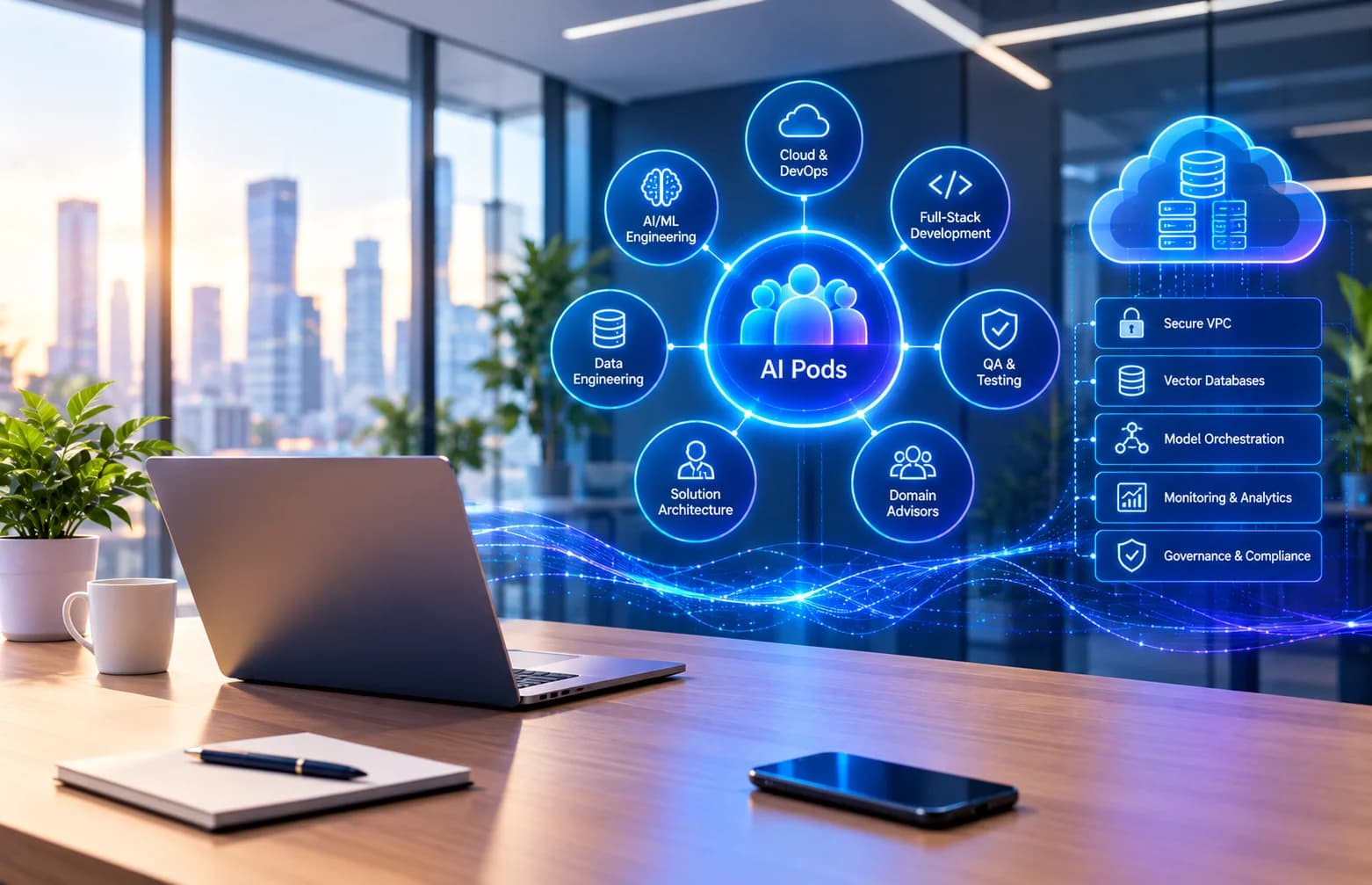
Seasia’s recommendation: For most US mid-market enterprises, the AI agent wrapper is the right starting point, especially if AI adoption is the goal. You do not need to rewrite everything to deploy AI agents. You need clean interfaces, reliable governance, and a modernization partner who understands both legacy systems and agentic AI development services.
How AI Agents Actually Modernize Legacy Systems
AI-assisted modernization is not about asking a chatbot to rewrite code.
Done properly, it is a structured engineering process where AI agents help discover, document, integrate, test, and gradually modernize legacy systems under expert supervision.
McKinsey notes that generative AI agents can accelerate technology modernization timelines by 40–50% and reduce costs tied to technology debt when applied through orchestrated, human-governed workflows.
Here is what the process looks like.
Phase 1: AI Discovery
Typical timeline: Week 1-3
The first step is understanding what the system actually does.
AI discovery agents scan the codebase, documentation, logs, database structures, dependencies, and workflows. They help identify:
Critical business logic
Undocumented dependencies
Technical debt hotspots
Security gaps
Integration constraints
Modules suitable for wrapping, refactoring, or retirement
What previously took months of manual review can now be compressed into a few focused weeks.
At Seasia, this phase is always paired with human validation. AI can accelerate discovery, but business logic must be reviewed by architects, domain experts, and stakeholders who understand the operational context.
Phase 2: API Surface Creation
Typical timeline: Week 4-8
Once the system is mapped, the next step is creating a clean access layer.
Legacy functions are exposed through secure REST or GraphQL APIs. Where direct API exposure is risky, middleware, event buses, or integration adapters are used.
This allows the legacy system to keep running while modern applications, AI agents, dashboards, and workflows interact with it safely.
In many cases, Change Data Capture is used to sync legacy databases with a modern data store in near real time. That gives AI agents fresher data without putting unnecessary strain on the core system.
Phase 3: AI Agent Layer
Typical timeline: Week 9-16
Once clean interfaces exist, AI agents can be introduced.
These agents may support:
Automated compliance checks
Customer support workflows
Claims or ticket triage
Predictive maintenance alerts
Financial anomaly detection
Inventory forecasting
Internal knowledge search
Workflow orchestration
Report generation
Data validation
The old interface can also be replaced with a modern UI while the legacy system continues to operate underneath.
For users, the experience changes quickly. For the enterprise, the migration remains controlled.
Phase 4: Gradual Migration
Typical timeline: Month 5-12
Once the wrapper and agent layer are stable, the business can retire legacy modules one at a time.
This is where modernization becomes sustainable. Instead of betting everything on one massive launch, each module is validated, tested, and transitioned in phases.
The result is full modernization without big-bang risk.
Real Cost Breakdown: Legacy Modernization with AI Agents in 2026
Legacy application modernization cost depends on system complexity, documentation quality, industry compliance requirements, integration depth, data migration needs, and the modernization path chosen.
Still, most US enterprises can use the following ranges for planning.
Modernization Path | Estimated Cost | Timeline | Best For |
|---|---|---|---|
AI Agent Wrapper | $60,000-$120,000 | 10-16 weeks | Systems that work but block AI adoption |
Incremental Refactor + AI | $120,000-$300,000 | 16-28 weeks | Outdated architecture, scaling issues, growing delivery needs |
Full Phased Modernization | $300,000-$800,000 | 6-18 months | COBOL, mainframe, end-of-life ERP, or deeply fragile systems |
Hidden costs most modernization budgets miss
The visible cost of a legacy system is maintenance. The real cost is much broader.
It includes specialist support, downtime risk, security workarounds, manual reporting, duplicate data entry, delayed releases, failed integrations, shadow IT, and missed AI opportunities.
Enterprises also need to account for:
Contractor premiums for legacy specialists
Cyber insurance pressure
Zero-trust overlays for aging systems
Compliance reporting effort
Manual reconciliation
Business disruption during outages
Lost productivity from outdated interfaces
Opportunity cost of delayed AI initiatives
The ROI case becomes stronger when these hidden costs are included.
A $100,000 AI agent wrapper may look like a technology expense. But if it eliminates manual reporting, accelerates support workflows, reduces specialist dependency, and unblocks AI pilots, the payback window can be far shorter than a traditional modernization program.
Industry Breakdown: How US BFSI, Healthcare, and Manufacturing Are Doing It
Legacy modernization looks different in every industry. A healthcare system has different risks than a bank. A manufacturer has different constraints than a retailer. A logistics company has different urgency around real-time data.
Here is how modernization is playing out across key US sectors.
Healthcare Software Modernization
Common pain: EHR systems, hospital management platforms, billing systems, and compliance workflows are often 15–20 years old. They work, but they are difficult to integrate with AI agents, patient engagement tools, analytics layers, and modern interoperability standards.
Modernization approach: API wrapper + FHIR layer + AI agents for workflow automation.
For example, a provider may use AI agents to automate prior authorization checks, summarize patient documentation, flag compliance issues, or reduce manual reporting cycles.
Potential outcome: Compliance reporting that once took weeks can be reduced to days when data is structured, accessible, and governed.
We have experience building healthcare modernization solutions for clients running legacy healthcare infrastructure with HIPAA-aware architecture, secure data handling, and zero-downtime migration planning.
BFSI Legacy Modernization
Common pain: Banks, credit unions, insurance companies, and financial institutions often depend on COBOL-based systems, mainframes, batch processing, and heavily customized platforms.
These systems are reliable, but difficult to adapt for real-time fraud detection, open banking APIs, AI-powered risk scoring, customer self-service, and advanced reporting.
Modernization approach: Strangler Fig architecture, API-first banking interfaces, modern reporting layers, and AI agents on top of legacy cores.
Capital One’s engineering team has previously described how many large financial institutions depend on monolithic mainframe systems and how serverless, API-led architectures can support faster delivery, real-time workloads, scalability, and better cost efficiency.
Seasia’s BFSI teams help modernize legacy financial systems through secure API layers, fraud detection engines, reporting dashboards, workflow automation, and cloud-ready modernization strategies.
Manufacturing Software Modernization
Common pain: Manufacturers often run on legacy ERP, MES, WMS, SAP ECC, Oracle E-Business, and custom plant-level systems that were never designed for real-time analytics or AI-based decisioning.
SAP has confirmed mainstream maintenance for SAP Business Suite 7 core applications until the end of 2027, followed by optional extended maintenance until the end of 2030 with a premium. That makes modernization planning urgent for SAP-heavy manufacturers.
Modernization approach: AI agent layer for real-time dashboards, predictive maintenance, inventory intelligence, production planning, and gradual module migration.
Potential outcome: Legacy ERP maintenance costs can be reduced while business teams get better visibility into production, quality, supply chain, and asset performance.
We work with manufacturing clients to replace outdated interfaces with AI-powered dashboards, modern integrations, and scalable data layers while keeping core systems stable during transition.
Retail System Modernization
Common pain: Retailers need real-time inventory, AI-powered personalization, omnichannel fulfillment, loyalty intelligence, and faster checkout experiences. Legacy commerce systems slow all of this down.
Deloitte’s 2026 retail outlook reports that nearly 68% of surveyed retailers expect to deploy agentic AI for key operational and enterprise activities within 12 to 24 months. The same report notes that 44% say legacy systems are slowing innovation.
Modernization approach: Modern API layer, customer data unification, AI recommendation engines, order orchestration, and agent-ready commerce workflows.
For retail and e-commerce brands, Seasia builds AI-ready architectures that connect inventory, CRM, payments, customer support, loyalty, and storefront systems into one scalable digital ecosystem.
Logistics Software Modernization
Common pain: Logistics enterprises often depend on older TMS, WMS, dispatch systems, route planning tools, and siloed carrier integrations. These systems struggle with real-time visibility and AI-based decision-making.
Modernization approach: API-first logistics architecture, AI agents for dispatch coordination, shipment tracking, route optimization, exception management, and predictive ETAs.
Seasia supports logistics software modernization by helping enterprises connect fragmented systems, modernize operational dashboards, and build AI-powered workflows for faster, smarter movement of goods.
Conclusion: AI Agents Have Changed the Modernization Math
Legacy modernization in 2026 is no longer automatically a three-year, $2 million project.
AI agents have changed the math. Many US enterprises can achieve AI-ready infrastructure in 10–16 weeks at a fraction of the traditional cost. The question is no longer whether to modernize. It is whether the business can afford another year of 80% IT budget going to maintenance.
Seasia modernizes legacy systems for US enterprises using AI agents across BFSI, healthcare, manufacturing, retail, and logistics.