The business landscape in the United Arab Emirates is moving past basic digitization and entering a phase of systemic automation. This transition is not merely about adopting isolated digital tools, instead, it represents a deep restructuring of corporate operations. Driven by the Dubai Economic Agenda (D33), which aims to generate AED 100 billion annually through digital innovation, the integration of algorithmic intelligence has become a core strategy for modern enterprises.
To keep up with this transformation, forward-thinking businesses are moving away from limited, off-the-shelf software solutions. Instead, businesses are turning to custom software development in Dubai to create flexible, high-performance systems that are tailored to their unique operating requirements.
In this blog, we explore the growing role of enterprise AI integration in Dubai and its impact on business transformation.
The Macroeconomic Context: Why Dubai Is Leading the AI Wave
The scale of this algorithmic shift is verified by recent macroeconomic assessments. According to the Microsoft AI Economy Institute’s H2 2025 report, the United Arab Emirates leads the world in generative AI adoption, with 64.0% of its working-age population utilizing AI tools.
This rapid integration is projected to yield massive dividends, with PwC estimating that AI will contribute close to 14% of the UAE's gross domestic product (GDP) by 2030, representing a major share of the projected $320 billion regional economic impact.
Consequently, businesses are turning away from rigid, off-the-shelf software and investing heavily in custom software development services in Dubai to maintain operational agility and capture a competitive edge.
To govern this expanding digital landscape, the UAE established the Federal Authority for Artificial Intelligence and Data in June 2026. This centralized body consolidates data regulations, AI oversight, and digital governance under one umbrella, signaling that compliance and responsible deployment are now mandatory criteria for any enterprise software development in Dubai.
Moving Beyond Out-of-the-Box Limitations
While traditional Software-as-a-Service (SaaS) products provide quick initial setup, they frequently cause operational bottlenecks in large enterprises. Rigid data formats, generic API constraints, and vendor lock-in can impede a company's ability to tailor workflows or develop unique algorithms.
Modernizing these core transactional systems requires the specialized touch of an experienced custom software development company in Dubai, like Seasia.
Architectural Attribute | Off-the-Shelf SaaS Solutions | Custom Enterprise AI Platforms |
|---|---|---|
Data Control & Sovereignty | Data processed on shared public clouds, potential cross-border transfer risks. | Data hosted on local or private sovereign clouds, full compliance by design. |
Workflow Adaptability | Limited to predefined layouts, generic modules, and restrictive configurations. | Tailored around specific operational routing, territory maps, and data logic. |
Cost Efficiency at Scale | Predictable early costs, but high per-unit or user-based fees that restrict growth. | Higher initial engineering investment, with zero per-unit scaling costs. |
Algorithmic Edge | Shared, non-proprietary models accessible to competitors. | Proprietary models trained exclusively on internal data. |
By choosing custom systems, enterprises ensure that their digital assets can scale, adapt, and run within sovereign cloud environments, protecting their unique operational advantages.
Transforming ERP and CRM Environments
True digital transformation in UAE requires integrating intelligence directly into core business tools: Enterprise Resource Planning (ERP) and Customer Relationship Management (CRM) platforms.
Cognitive ERP and Workflow Automation
Traditional ERP platforms act as repositories for historical records, but they often struggle to support real-time decisions. Adding custom AI layers to these platforms turns static databases into active, predictive systems.
For example, in logistics and manufacturing, custom predictive models can analyze physical inventory, supplier lead times, and market demand to automate inventory ordering.
This approach is reflected in Seasia's modernization efforts for Mainstreet Equity Corporation, where the team engineered a custom real estate ERP platform. By replacing disconnected systems with unified modules for automated tenant screening, background checks, rent collection, and real-time ledger accounting, the platform allowed the organization to manage expanding property portfolios across multiple cities without increasing its administrative team.
Proactive Sales Intelligence in CRMs
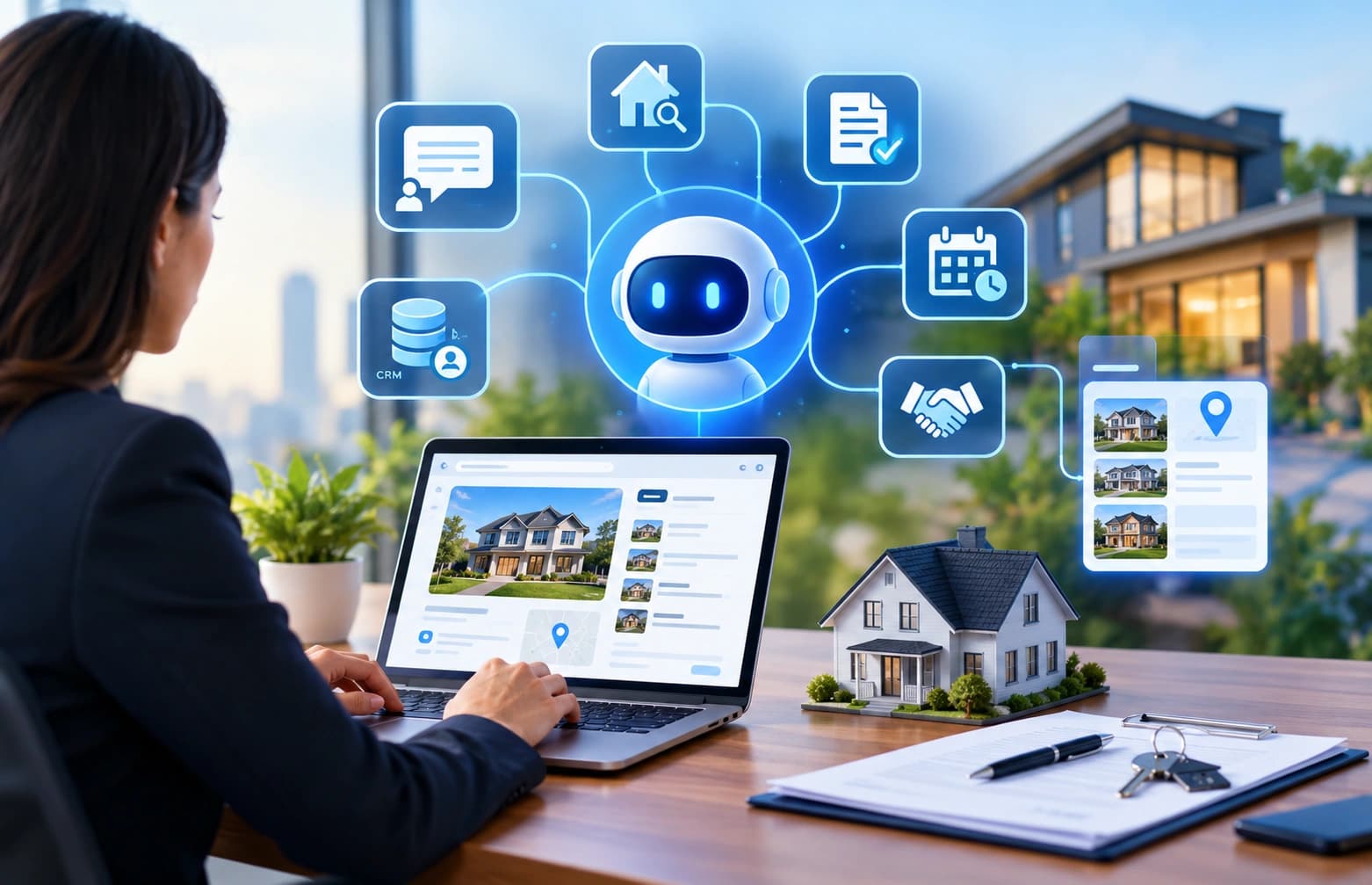
Traditional CRMs depend heavily on manual data entry, which often results in stale pipelines and missed business. Modern sales environments require proactive, dynamic customer engagement. In relationship-heavy, route-driven service industries, winning deals relies on precise timing and territory intelligence.
Custom sales intelligence platforms solve this by combining AI-based lead generation, predictive scoring, and geo-visualization tools. A practical example is the custom AI-powered sales intelligence system built by Seasia Infotech. This solution maps routes, ranks lead opportunities based on conversion likelihood, and triggers automated, personalized outreach sequences directly within existing communication workflows. This shifts the CRM from a passive directory into a proactive system that shortens sales cycles and improves outreach consistency.
Data Synchronization and Modernizing Legacy Systems
The success of any enterprise AI integration application depends on the quality and accessibility of its underlying data. When data is locked in old, disconnected systems, models struggle to produce accurate results. To build reliable automation, companies must focus on clean, high-throughput data pipelines.
Managing multi-system data flows requires custom-built synchronization frameworks. This need is highlighted by Seasia’s work on a large-scale data synchronization platform for an automotive electronics provider. By re-engineering the backend architecture to include automated batching, multi-level retry logic, and strict validation rules, the team stabilized a complex multi-hour synchronization process handling millions of records. This structural upgrade eliminated data mismatches, ensuring that downstream operational decisions were based on accurate, real-time pricing and product information.
In knowledge-heavy environments, legacy systems can also be modernized using adaptive frameworks. By linking structured information with secure, automated tracking systems, organizations can extract maximum value from their intellectual property while safeguarding data ownership.
Compliance, Security, and Sovereignty in the UAE
For organizations pursuing enterprise AI integration in Dubai, meeting these security, governance, and compliance requirements is essential to building trusted and scalable AI ecosystems.
Navigating the UAE PDPL and Sovereign AI
The regulatory landscape in Dubai is shaped by strict data protection mandates. The UAE Personal Data Protection Law (Federal Decree-Law No. 45 of 2021) establishes clear guidelines for processing personal data, with a final compliance deadline set for January 1, 2027.
A major point of friction for businesses is the restriction on cross-border data transfers. Cloud-based AI APIs that send customer data to foreign servers for processing create significant legal risks under the PDPL.
To address this challenge, organizations are adopting sovereign AI strategies. Running AI models locally on-premises or within UAE-based secure cloud infrastructure ensures that sensitive customer data never leaves national borders, eliminating transfer risks by design.
Designing Secure AI Infrastructures
Building secure AI systems requires incorporating data protection directly into the software architecture. Key practices include:
Robust Access Management
Restricting access to sensitive data repositories using role-based access controls (RBAC) and multi-factor authentication (MFA) to prevent unauthorized internal or external use.
Data Minimization & Automated Retention
Collecting only the information required to train or run specific models and utilizing automated deletion routines to ensure compliance with data minimization rules.
Data Protection Impact Assessments (DPIA)
Conducting detailed assessments for high-risk activities, such as automated profiling, large-scale monitoring, or cross-border data transfers.
Mandatory Encryption Baselines
Ensuring all personal data is encrypted both at rest and in transit, using at least AES-256 for storage (protecting stored data) and TLS 1.2+ for communication (securing data during transmission).
Aligning Team Culture with Technological Automation
A common challenge in enterprise AI integration is that while executive leaders strongly support automation, the actual operational adoption can face resistance from middle managers and staff. Employees often view new systems with skepticism, seeing them as tools for displacement rather than support.
Overcoming this resistance requires structured change management. Leadership must communicate that AI is designed to augment human work, not replace it.
This approach is demonstrated by Majid Al Futtaim’s Azure OpenAI-powered operational analytics, which saved the company $1 million annually while compressing feedback workflows from seven days to just three hours. The system succeeded because it was designed to support employees, giving them faster access to insights and allowing them to focus on high-value, creative tasks. Custom systems should be engineered to serve as smart assistants, helping staff work more efficiently and building trust across the organization.
The Tech Frontier: Agentic AI and Retrieval Pipelines
The field of AI software development in UAE is moving past basic, rule-based chatbots toward flexible, self-optimizing platforms.
Contemporary enterprise systems are being built on two key technologies:
Agentic AI Protocols
These systems go beyond simple conversational prompts. Agentic AI can break down complex instructions, plan execution steps, and interact directly with enterprise databases via secure APIs to complete workflows autonomously.
Under the Dubai Universal Blueprint, the government is working to integrate these autonomous agents into 50% of public sector workflows, encouraging a similar adoption wave in the private sector.
Production-Grade RAG Pipelines
Retrieval-Augmented Generation (RAG) connects large language models to secure vector databases. By utilizing advanced chunking and semantic search, RAG pipelines query real-time internal data, delivering highly accurate, context-aware answers while preventing data leaks and model hallucinations.
Closing Thoughts
Enterprise AI is becoming a practical business capability rather than a future initiative. In Dubai, organizations combine custom software with intelligent automation to modernize core systems, improve operational agility, and strengthen decision-making. As regulations evolve and AI adoption accelerate, long-term value will come from solutions built around secure data, seamless integration, and business-specific workflows. With experience across enterprise modernization and AI-driven platforms, Seasia helps organizations build that foundation with confidence.
Speak with our specialists to discuss the right approach for your business transformation journey.