

Restaurant Management Software Development for Multi-Service Vendor Operations
Seasia developed Tevio, an enterprise-grade merchant management ecosystem built for restaurant owners, food vendors, grocery sellers, and catering providers. The platform brings live order management, catalogs, reservations, promotions, payouts, staff permissions, customer communication, and delivery operations into a unified vendor command center.
Project Overview
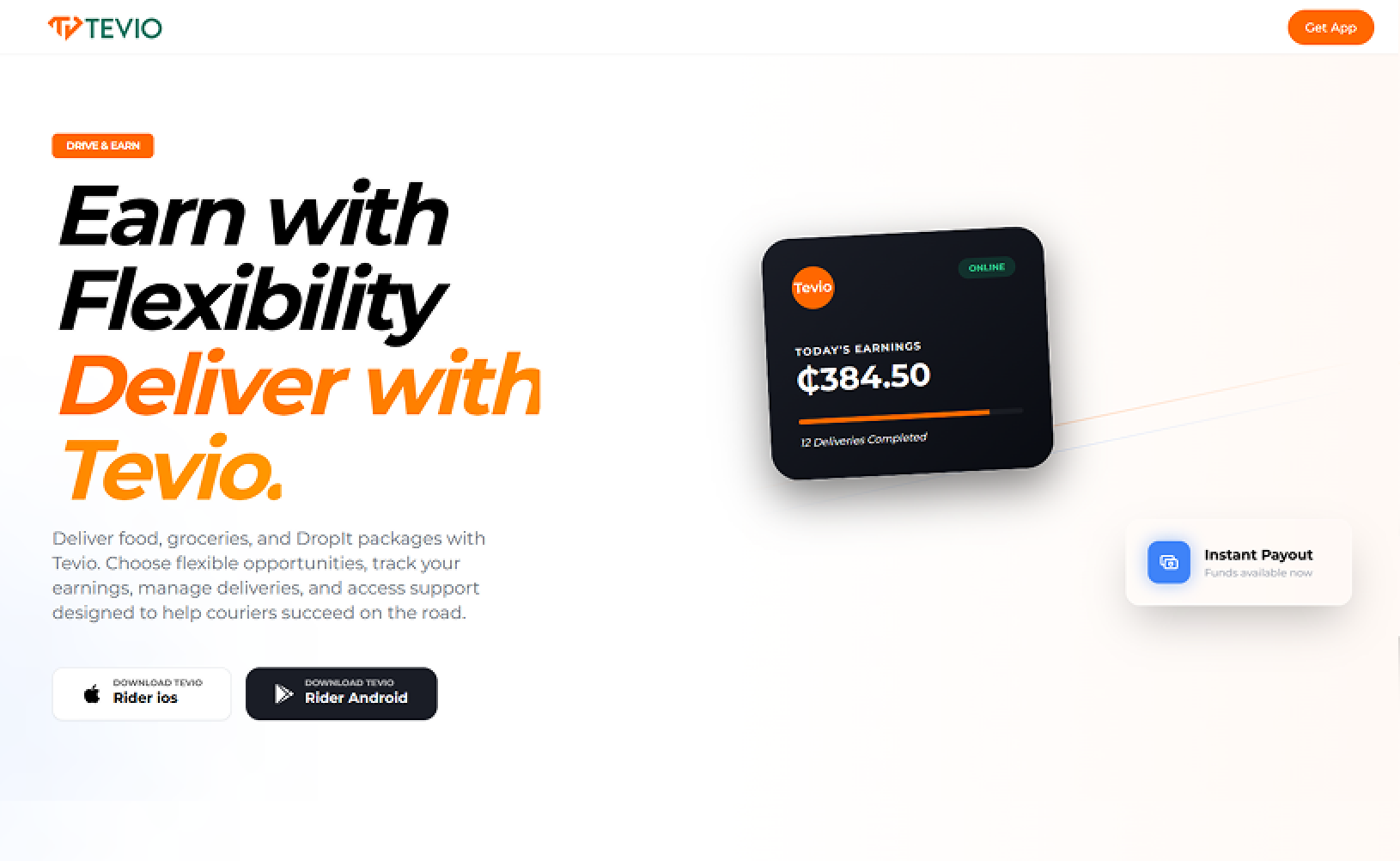
Tevio is a full-stack restaurant management software platform developed to centralize day-to-day merchant operations across multiple service models.
The system enables vendors to manage live orders, menus, inventory, reservations, promotional campaigns, financial settlements, staff permissions, customer interactions, and delivery coordination through a single web-based interface.
Underneath the merchant portal, Seasia implemented a five-service backend architecture that separates authentication, administration, restaurant operations, orders, and notifications into independently managed domains.
Project Overview
Tevio is a full-stack restaurant management software platform developed to centralize day-to-day merchant operations across multiple service models.
The system enables vendors to manage live orders, menus, inventory, reservations, promotional campaigns, financial settlements, staff permissions, customer interactions, and delivery coordination through a single web-based interface.
Underneath the merchant portal, Seasia implemented a five-service backend architecture that separates authentication, administration, restaurant operations, orders, and notifications into independently managed domains.
Project Scope & Business Challenges
The project required more than standard food delivery software development. Tevio had to support several merchant use cases within the same ecosystem while maintaining consistent workflows, real-time performance, and financial controls.

Fragmented Vendor Operations
- Restaurants, grocery sellers, food vendors, and catering providers were operating across different service models, each with its own requirements for orders, menus, inventory, reservations, promotions, and fulfillment. The platform needed to consolidate these processes without forcing every merchant into the same rigid workflow.

High-Concurrency Order Management
- Order activity needed to be reflected immediately across merchant interfaces. Polling-based approaches could introduce delays, stale order states, and unnecessary server load during peak operating periods.

Complex Promotional Rules
- Merchants required promotional tools capable of supporting off-peak campaigns, promo codes, advertising placements, and seasonal offers. These promotions also needed financial controls to prevent discounts from unintentionally eroding merchant margins.

Multi-Party Payment & Settlement Complexity
- Vendor earnings, platform commissions, taxes, driver payments, bank transfers, card payments, and Mobile Money introduced significant settlement complexity. Manual payout processes would not scale efficiently as merchant and transaction volumes increased.

Granular Employee Permissions
- Restaurant teams included employees with different responsibilities. Operational staff needed access to orders and menus, while sensitive financial, payout, and administrative settings had to remain restricted.

Search Across Location-Based Inventory
- Users needed fast product and restaurant discovery even when searches were incomplete, misspelled, or geographically constrained.

Multi-Channel Customer & Driver Communication
- The platform required reliable real-time and asynchronous communication for order updates, support interactions, notifications, and operational coordination.
Solution Offered by Seasia
Seasia developed Tevio as a scalable restaurant management software development project built around domain separation, event-driven communication, real-time updates, and automated financial workflows.

Unified Merchant Command Center
A React-based single-page application provides vendors with centralized access to live orders, menus and inventory, reservations, catering inquiries, promotions, advertising, payouts, employee management, customer communication, and reports and revenue data. This reduces the need for merchants to manage operations across disconnected tools.

Domain-Driven Microservices Architecture
The backend was divided into five dedicated services: authentication, administration, restaurant, orders, and notifications. This separation allows different business domains to evolve independently while reducing coupling across the wider platform.

Live Order Management
Seasia developed a real-time Kanban-style order interface using Socket.io. Merchants receive live order-state updates along with audio and visual alerts, allowing restaurant teams to respond quickly without repeatedly refreshing or polling the server.

Menu & Inventory Management
Merchants can manage their catalogs through a drag-and-drop interface supporting menu items, product variants, add-ons, pricing, availability, and stock toggles. This gives vendors direct control over product availability and configuration.

Smart Promotion & Advertising Engine
Seasia implemented promotional logic across both frontend and backend layers. The system supports promotional campaigns, promo codes, seasonal offers, off-peak promotions, advertising placements, and validation rules. This allows merchants to run offers while applying safeguards against commercially unsustainable discount combinations.

Automated Paystack Payout Pipeline
Vendor and driver payouts were automated using Paystack, Redis, and BullMQ. The platform supports bank payouts, mobile money, subaccounts, transfers, and card-related transaction flows. Queue-based processing helps move settlement workflows away from manual operations and provides better control over asynchronous financial tasks.

Search & Discovery with Typesense
Typesense was integrated into the Restaurant service to provide fast fuzzy and geospatial search. This improves discovery when users enter incomplete search terms or look for nearby restaurants and products based on location.

Reservations & Dine-In Management
The platform supports table reservations and dine-in workflows, including reminder functionality to help vendors manage scheduled customer visits.

Catering Workflows
Catering providers can receive inquiries and generate quotes through dedicated workflows within the same vendor ecosystem.

Granular Role-Based Access Control
The system allows merchants to create employee roles with carefully scoped permissions. Operational staff can access the functions they need without automatically gaining visibility into financial or administrative settings.

Secure Multi-Provider Authentication
Authentication capabilities include Google OAuth, Apple Sign-In, Azure MSAL, and JWT verification. Redis-based rate limiting provides an additional layer of request protection.

Real-Time Communication & Notifications
A dedicated Notification microservice manages event-driven communication through Socket.io, Apple push notification service, Firebase cloud messaging, and Twilio SMS. This supports real-time updates for merchants, customers, and drivers.
Our Tech Stack
Frontend
 React 19
 TypeScript 5.9
 Vite 7 with SWC
Backend
 Node.js ES Modules
 Express.js
Architechture
 5 Microservices
 Auth, Admin
 Restaurant
 Notification
Database & Cache
 PostgreSQL
 Sequelize, Redis
 Redis
RedisFrontend
React 19TypeScript 5.9Vite 7 with SWCBackend
Node.js ES ModulesExpress.jsArchitechture
5 MicroservicesAuth, AdminRestaurantNotificationDatabase & Cache
PostgreSQLSequelize, RedisRedisFeatures & Outcomes Delivered
Through the Tevio restaurant management software development engagement, Seasia delivered a multi-service platform capable of supporting merchant operations across ordering, fulfillment, promotions, payments, reservations, catering, and staff management.
Live Order Kanban
Merchants can monitor and update active orders through a real-time Kanban interface with visual and audio notifications.
Event-Driven Order Lifecycle
Structured order states manage progression from placement through fulfillment, including unpaid-order cancellation and courier dispatch.
Menu & Inventory Management
A drag-and-drop catalog interface allows vendors to control items, variants, add-ons, prices, and stock availability.
Catering Inquiry & Quotation
Catering businesses can receive customer inquiries and generate quotes within the platform.
Fast Fuzzy & Geospatial Search
Typesense enables location-aware discovery along with resilient fuzzy search for restaurant and product data.
Smart Promotions & Promo Codes
Merchants can configure promotional campaigns and discount rules while backend validation helps protect margins.
Advertising Placements
The platform includes merchant advertising capabilities alongside promotional campaigns.
Table Reservations & Dine-In
Restaurant operators can manage customer reservations and dine-in activity with automated reminders.
Revenue & Transaction Dashboards
Merchants and administrators can review revenue performance, earnings breakdowns, transaction histories, and financial activity. Reports can also be exported in XLSX format.
Automated Vendor & Driver Payouts
Paystack-powered payout workflows automate supported bank and Mobile Money transfers using queue-based processing.
Employee & Permission Management
Granular RBAC allows merchants to assign operational roles without giving every employee access to sensitive account or financial settings.
Support & Administration
The platform includes support tickets, live admin chat, support dispatch, and achievement badges.
Voice & Video Capabilities
Agora SDK integration supports token generation for platform-based voice and video communication.
Planning a Restaurant, Delivery, or Multi-Service Merchant Platform?
Whether you need a restaurant order management system, vendor portal, food delivery ecosystem, grocery delivery platform, automated payout engine, or multi-service hospitality solution, Seasia can architect the platform around your operating model.
From the Seasia Engineering Lab
The intelligence layer behind how Seasia teams plan, engineer, test, release, and govern enterprise software.