
 Technology Leadership
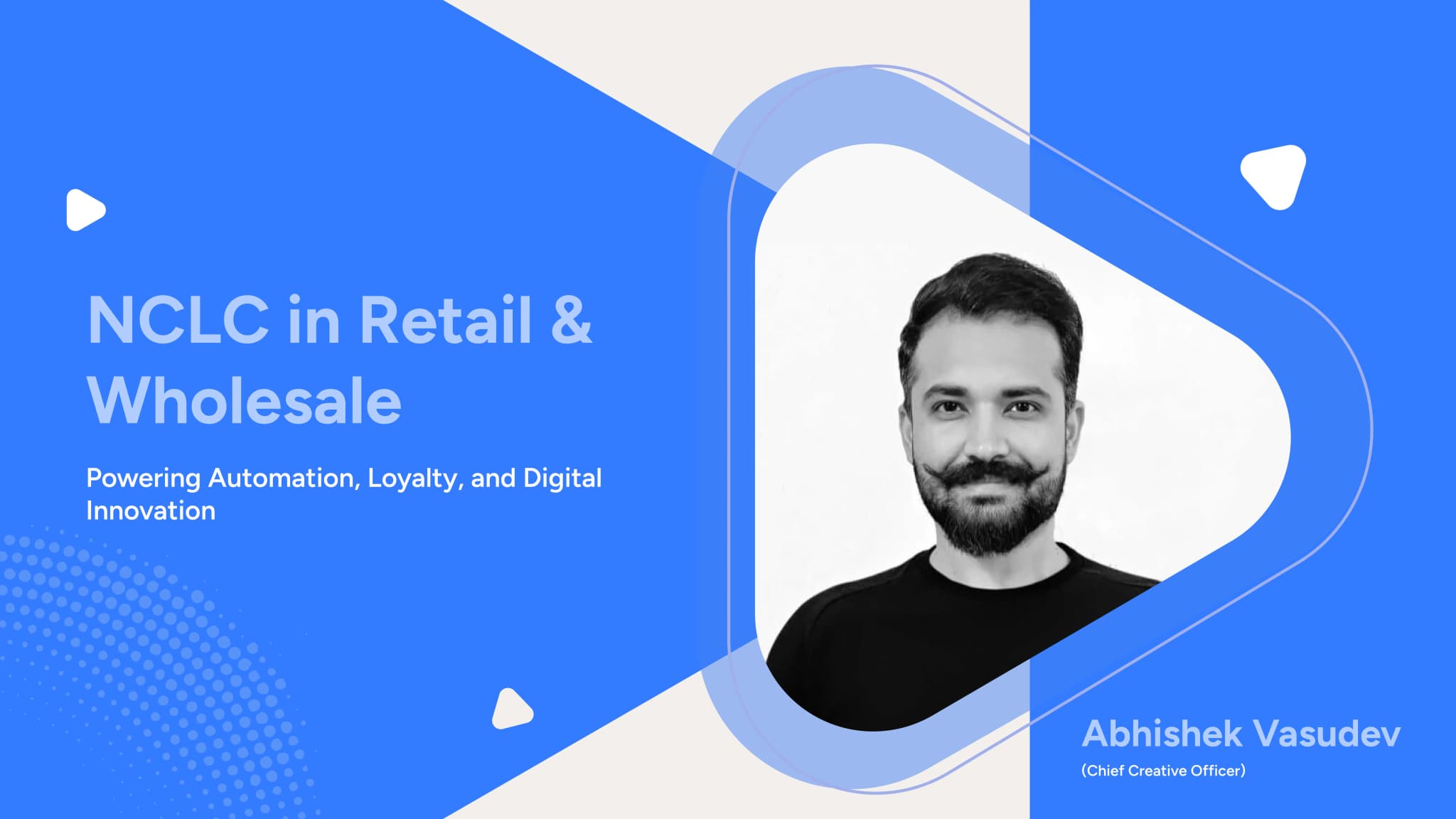
The Future of Retail: How NCLC Is Becoming the Backbone of Digital Transformation
As the Chief of the NCLC department at Seasia Infotech, I spend most of my time sitting at the intersection of business and technology. And nowhere is that intersection more exciting right now than in retail and wholesale.
Consumer expectations are changing weekly, margins are razor thin, and traditional IT backlogs can’t keep up. NCLC is turning into the “fast lane” that lets retailers and wholesalers automate core processes, launch new customer experiences, and iterate loyalty programs in days instead of months without waiting for large development teams.
Let me walk through what recent industry research is telling us, and how we’re using NCLC to automate loyalty programs and democratize innovation inside organizations like ours.
The Big Picture: NCLC Is Now a Core Enterprise Strategy
Recent industry research paints a very clear picture: NCLC has moved from being a side experiment to becoming the default way to build business applications.
Gartner and others forecast the global low-code market to reach around $44–45 billion by the end of 2026, growing at roughly 19% CAGR.
Multiple analyses now converge on a similar prediction: around 70% of new enterprise applications will use low-code/no-code by 2025, up from less than 25% in 2020.
A recent Mendix survey reports that 98% of enterprises already use some form of low-code tools, and 84% say low-code empowers more people across the business to participate in app development.
This isn’t just a tooling change, but a structural shift in how organizations deliver technology.
Gartner describes the rise of the citizen developer: business users who build application capabilities using approved tools, even though they aren’t part of IT.
In other words: the people who deeply understand retail operations, merchandising, customer service, or wholesale price negotiations are now able to directly build and automate their own workflows with NCLC as the enabler.
What Research Says About NCLC in Retail & Wholesale
Industry research focused on retail and wholesale shows consistent themes:
Streamlined operations: NCLC platforms help retailers automate end-to-end processes like inventory tracking, order processing, returns management, vendor approvals, and store operations, reducing manual errors and time-to-execution.
Higher customer retention: Low-code-powered automation is being used to run personalized promotions, targeted loyalty campaigns, and consistent omnichannel experiences, all proven levers for better repeat purchase and retention.
Improved agility: Retail-focused analyses highlight that low-code/no-code allows retailers to shorten development cycles and respond quickly to changing market conditions or seasonal demands.
When you connect these dots, the pattern is obvious: NCLC isn’t just about cheaper apps; it’s about faster experimentation and more resilient retail business models.
How NCLC Streamlines Retail & Wholesale Operations
From my seat at Seasia, I typically see NCLC transformation across three operational layers.
1. Core Operations Automation
Retail and wholesale businesses have dozens of repetitive, rules-driven processes — perfect candidates for NCLC:
Order-to-Delivery:
Auto-create pick/pack tasks when an order is confirmed
Trigger shipment label generation and dispatch notifications
Route issues (stock-out, payment failure) to the right team
Inventory & Replenishment:
Automated low-stock alerts
NCLC workflows that calculate reorder points based on sales trends
Vendor request approvals with SLA tracking
Returns & Refunds:
Self-service return forms integrated with order data
Automated eligibility checks based on policies
Workflow-based approvals for high-value returns
Instead of asking IT to “build a full system,” teams can stitch these flows together visually using forms, rules, and drag-and-drop connectors to existing ERPs, POS, or e-commerce platforms.
2. Analytics-Driven Agility
Most NCLC platforms today come with built-in dashboards or easy integrations to analytics tools. Research shows that retailers using low-code/no-code can iterate on ideas in real time, rapidly adjusting promotions, prices, or workflows based on performance.
This agility matters when:
A product goes viral on social media and demand spikes
A particular region underperforms and needs localized campaigns
Supply chain disruptions require rapid policy or process changes
With NCLC, the business doesn’t submit a ticket and “wait for next sprint”; they can adjust the workflow themselves within the guardrails set by IT.
3. Cross-Channel Consistency
Wholesale and retail are increasingly omni-channel: web, app, physical store, third-party marketplaces, distributor portals. NCLC platforms are often used to:
Sync customer profiles and loyalty data across channels
Standardize approval flows (discounts, credit limits, special pricing)
Harmonize product and price data through lightweight integration apps
Instead of buying a monolithic system for each use case, organizations use NCLC to “fill the gaps” between systems and maintain consistent experiences..
A Concrete Scenario (End-to-End)
Imagine a mid-sized fashion retailer with 15 physical stores, an online storefront, and a wholesale channel supplying smaller boutiques.
Using an NCLC platform, the retailer could:
Build a unified customer profile app that pulls in transactions from POS and e-commerce.
Set up a no-code loyalty engine with different tiers for retail vs wholesale customers and automated rewards for volume purchases or on-time payments (for B2B).
Automate campaigns such as:
“Spend ₹5,000 in a month, get 10% off next purchase”
Seasonal festival campaigns with auto start/end dates
Special offers triggered when inventory is high for specific SKUs
Create an internal app (with almost no coding) where store managers view local customer segments, trigger localized micro-campaigns (e.g., “Rainy weekend sale”), and see real-time impact on store-level revenue and footfall.
The result: operations teams spend less time manually coordinating campaigns and more time refining what actually works for customers, and they can change it instantly when business conditions shift.
Democratizing Innovation Inside the Organization
The real strategic value of NCLC is not just speed, it’s who gets to innovate.
Low-code platforms are now used by both professional developers and business developers, with Forrester noting high adoption within enterprise IT teams while simultaneously empowering business-side builders.
Citizen developers in merchandising, operations, or marketing can assemble solutions themselves, within policy and security guardrails defined by IT.
From my perspective leading the NCLC function at Seasia, we see three big cultural shifts when this is done right:
1. Business Ownership of Digital Outcomes
Teams stop saying “IT didn’t build what we wanted” and start saying “Here’s what we’ve built, please help us scale and secure it.”
2. Fewer Shadow IT Workarounds
Because business users have sanctioned platforms with governance, they’re less likely to resort to rogue spreadsheets, unmanaged SaaS tools, or unsecure macros.
3. Continuous Micro-Innovation
Instead of waiting for one big “digital transformation project,” you get hundreds of small, incremental improvements from people closest to the problems, including store managers, sales reps, operations leads.
How We Approach NCLC at Seasia (In Retail Contexts)
Within Seasia Infotech’s NCLC department, we usually adopt a structured approach when working with retail and wholesale stakeholders:
Identify High-Impact Processes
Map customer journeys (from first touch to repeat purchases).
Identify friction points: manual approvals, repeated data entry, delays.
Prioritize flows that affect revenue and retention: checkout, returns, loyalty, promotions.
Design Governance & Guardrails
Define which teams can build what (roles, permissions).
Standardize data models and integration patterns.
Set review workflows for apps that impact compliance or finance.
Train Citizen Builders
Run hands-on workshops for marketing, operations, and product teams.
Create reusable templates: loyalty workflows, promotion apps, store audit apps.
Establish a community of practice for sharing best practices.
Measure & Iterate
Tie every NCLC initiative to clear metrics:
Time-to-launch for campaigns
Customer retention and repeat purchase rate
Process cycle time (e.g., approval times, onboarding time)
Continuously refine workflows based on data.
Closing Thoughts: NCLC as the Engine of Digital Retail
Recent research makes one thing clear: NCLC is no longer “nice to have.” It’s becoming the default way to build and adapt digital capabilities, especially in fast-moving sectors like retail and wholesale.
By:
Automating core operational workflows
Enabling dynamic, data-driven loyalty programs
Empowering non-technical teams to build and iterate
Keeping IT focused on governance, security, and architecture
…NCLC creates a powerful flywheel of rapid digital adoption.
As Chief of the NCLC department at Seasia, my mission is to make this flywheel spin faster, turning retail and wholesale organizations into adaptive, experiment-driven businesses where ideas from the shop floor, marketing desk, or sales call can quickly become production-grade digital solutions.
If your retail or wholesale operation still relies heavily on manual processes and long IT queues, NCLC isn’t just an efficiency play, it’s your competitive advantage waiting to be unlocked. Let’s help you unlock it faster!
Related Articles

The Hidden Environmental Cost of Artificial Intelligence
AI may feel effortless to users, but every query depends on energy, cooling and infrastructure. This article explores why the AI industry must make sustainability part of innovation.

The Rise of Autonomous SDLC: How AI Agents Are Redefining Software Delivery
Discover how Autonomous SDLC is reshaping software engineering with AI agents that automate development, testing, deployment, and governance while empowering teams to build better software faster.
Leading in the Age of AI: Strategies for Scalable Innovation
Learn how enterprise leaders can scale AI responsibly, transform operating models, and turn intelligent automation into measurable business value.