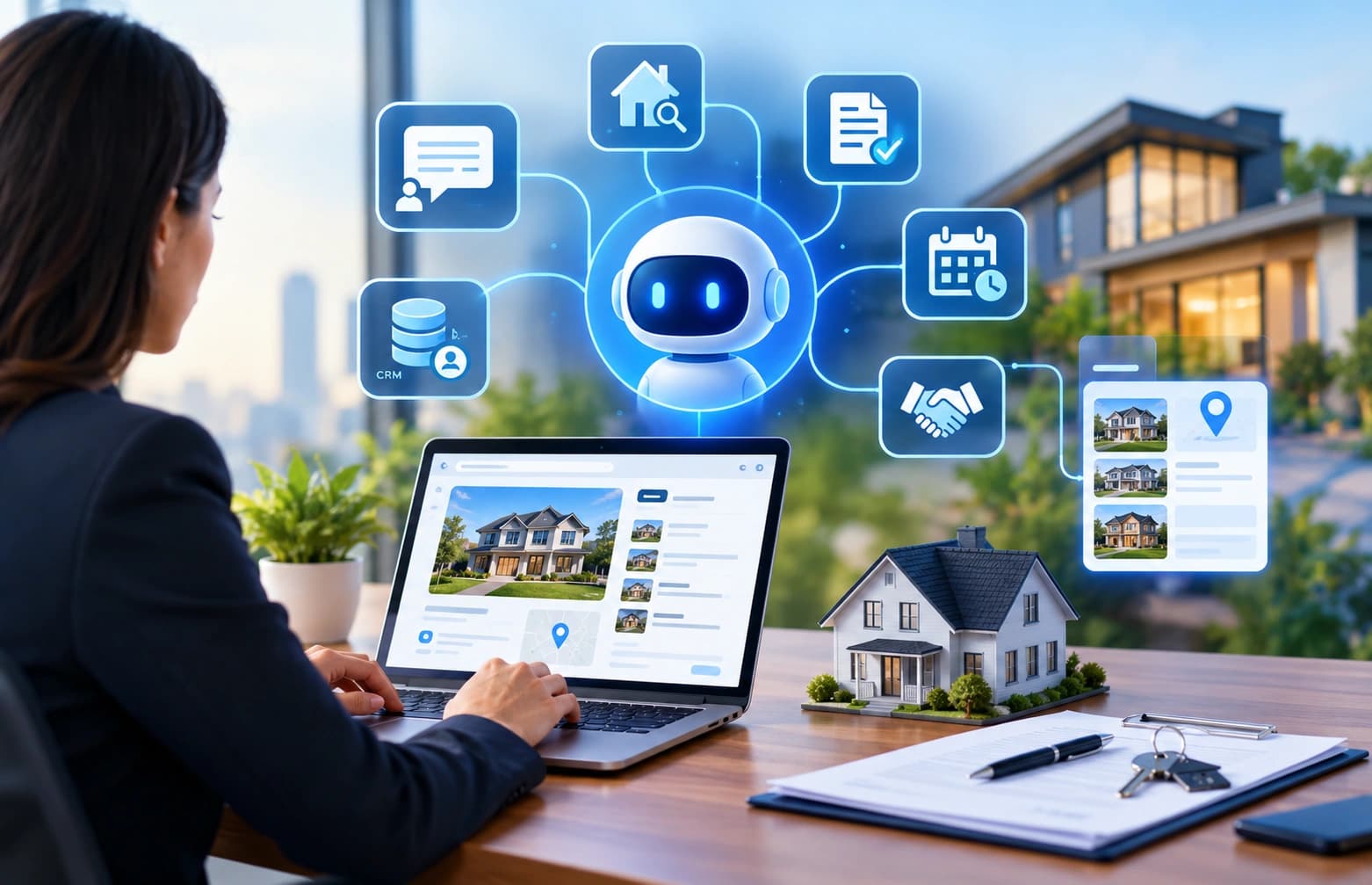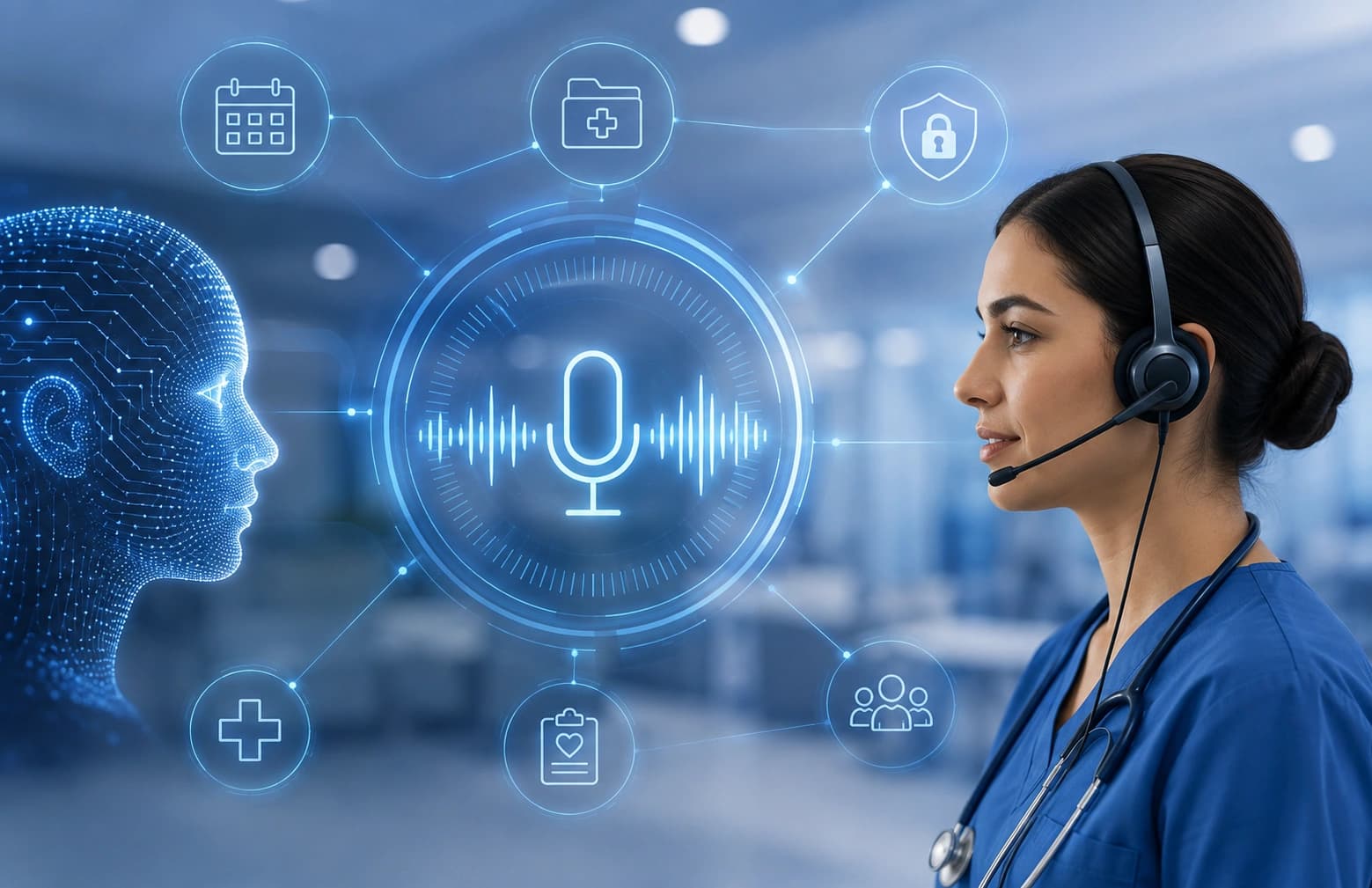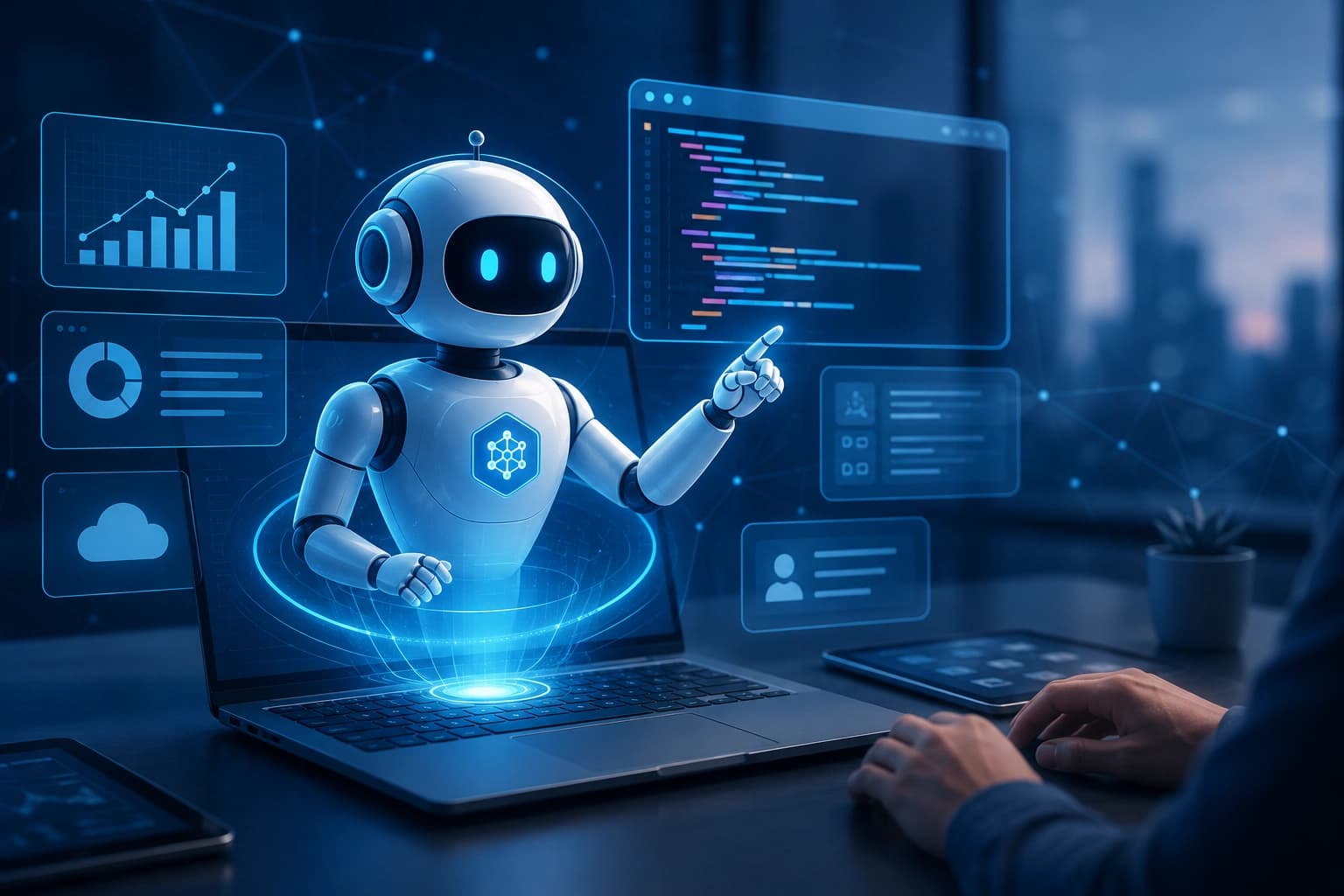
Modern enterprise software is rapidly evolving past rigid dashboards and manual; multi-step queries toward intelligent conversational interfaces embedded directly into business applications.
Strategic AI copilot development bridges the gap between raw corporate data and daily execution, reducing administrative friction, accelerating response times, and providing teams with real-time operational context.
Enterprise AI Copilot vs. Standard Chatbots
An enterprise AI copilot is an intelligent contextual assistant that is embedded right into the active software operations. It works with people, understanding live context, searching linked corporate information, creating useful assets, and recommending programmed next steps.
It’s not just a basic chatbot or standalone conversational interface:
Standard Chatbot: Operates on decision tree models that are preset and separated scripts. It handles simple text queries without deep system context or execution privileges.
General AI Assistant: Broad background knowledge from external foundation models, no access to internal business databases, real-time APIs, or security governance mechanisms.
Enterprise AI Copilot: Includes customizable domain knowledge, secure database connections, real-time multi-system action-taking, and role-based data access.
Organizations apply these smart technologies across many business areas. Human resource managers rely on AI assistant development solutions to answer policy questions, extract employee data, and draft onboarding schedules.
Interactive copilot technologies enable procurement officers to compare vendor contracts across thousands of files in the repository immediately. Strategic enterprise AI copilot development establishes solid underlying principles for corporate software transformation.
Core Architectural Layers of an Enterprise Copilot
Building a resilient infrastructure for enterprise applications requires multi-layered system engineering. A production architecture contains distinct structural layers:
Large Language Models (LLMs)
Foundation language models process natural language inputs, generate responses, and summarize complex multi-page documents. Organizations balance open-source models with commercial APIs based on latency targets, hosting costs, and data control needs.
Retrieval-Augmented Generation (RAG)
Retrieval-Augmented Generation architecture prevents language model hallucinations by grounding responses in verified internal datasets. Vector databases index enterprise documents as high-dimensional vector embeddings. When a user submits a query, the system retrieves relevant document fragments to inform the model generation phase.
Enterprise Data Connectors
Data connectors extract structured relational data, unstructured files, and transactional logs from repositories such as Snowflake, PostgreSQL, SharePoint, and Salesforce. Continuous data sync ingestion pipelines keep vector indices synchronized with source systems.
Knowledge Bases
Internal knowledge repositories organize corporate policies, code snippets, standard operating procedures, and customer histories into structured search indices. Semantic search infrastructure ensures retrieved context aligns directly with domain jargon.
APIs and System Integrations
Action execution layers convert model output intent into standard REST or gRPC API calls. This enables the copilot to create Jira tickets, update CRM entries, send email summaries, or generate invoice assets automatically.
Security and Access Control Layer
Enterprise data protection protocols enforce Role-Based Access Control (RBAC) and Attribute-Based Access Control (ABAC). The copilot retrieves only data records that the requesting user possesses explicit permissions to view, preventing unauthorized information disclosure.
AI Orchestration Layer
Orchestration engines manage message routing, context window limits, prompt templates, and multi-step tool execution pipelines. Structuring these components forms the baseline of technical AI copilot development.
High-Impact Enterprise Use Cases Across Departments
Organizations deploy custom enterprise AI software solutions across diverse business functions:
Sales Copilot for CRM Insights
Sales representatives spend up to 66% of their working hours on administrative operational tasks according to Salesforce research. A sales copilot automatically reviews historical client emails, synthesizes key pain points, updates deal pipeline statuses, and generates meeting prep summaries.
HR Copilot for Employee Assistance
Internal HR operations handle hundreds of repetitive inquiry tickets weekly regarding benefits, leave balances, and workplace policies. An HR copilot provides immediate, policy-verified responses and assists team leads with job description drafting.
Finance Copilot for Reporting and Analysis
Financial analysts utilize finance copilots to cross-reference multi-quarter ledger entries, compute variance metrics, flag anomalous expenditure items, and generate draft balance sheet commentary automatically.
Healthcare Copilot for Information Retrieval
Medical staff use healthcare copilots to search patient diagnostic records, check drug interaction parameters, and extract summary data from extensive clinical guidelines, adhering strictly to HIPAA data security standards.
Insurance Copilot for Claims Processing
Insurance claims adjusters review handwritten damage documentation, photo descriptions, and policy coverage terms. An insurance copilot aggregates submitted evidence, calculates coverage estimates, and flags potential fraud patterns for manual review.
Real Estate Copilot for Property Operations
Property managers leverage real estate copilots to process lease agreements, schedule tenant maintenance tasks, track utility consumption records, and generate market rent comparison reports.
Implementation Roadmap and Technical Engineering Approach
Executing custom AI copilot development projects requires a structured technical methodology:
Phase | Milestone Name | Primary Engineering Deliverables |
Phase 1 | Requirement Analysis | Map user personas, define productivity KPIs, plan system integrations, and document security mandates. |
Phase 2 | Data Preparation | Clean corporate datasets, remove redundant records, chunk unstructured documents, and compute vector embeddings. |
Phase 3 | AI Model Selection | Benchmark open-source and proprietary foundation models on domain-specific test prompts. Select based on reasoning accuracy, context capacity, latency, and costs. |
Phase 4 | Prototype Development | Build a minimal viable product featuring core RAG functionality, initial API execution connectors, and a conversational interface. |
Phase 5 | Integration & Testing | Perform technical validation, integration testing across target APIs, latency optimization, and load balancing. Advanced engineering principles govern systematic AI copilot development during this operational cycle. |
Phase 6 | Deployment & Monitoring | Roll out across staging and production Kubernetes environments. Implement telemetry pipelines to log accuracy, latency metrics, token cost, and user feedback. |
Managing generative AI application development also presents unique technical challenges that engineering teams must address:
Data Privacy
Protecting proprietary trade data requires private deployment architectures, data anonymization scripts, and zero-data-retention agreements with Large Language Model vendors.
Hallucination Control
Controlling language model hallucinations requires strict RAG retrieval boundaries, prompt constraint engineering, and secondary validation checks.
Enterprise Security
Preventing prompt injection attacks, unauthorized access attempts, and data leakage requires security boundaries around input vectors and output responses. Rigorous engineering mitigates these vulnerabilities during AI copilot development.
Integration Complexity
Interfacing modern vector pipelines with legacy databases introduces schema mismatches, network latency, and integration bottlenecks.
Performance Monitoring
System maintainers track model drift, response relevance scores, token utilization overhead, and system uptime across distributed enterprise server networks. Advanced AI application development workflows incorporate continuous telemetry monitoring.
Seamless Integration With Existing Enterprise Systems
Effective AI copilot integration links natural language processing capabilities with existing business software. Modern enterprise integration methods avoid replacing core legacy systems, connecting through secure middleware layers instead.
CRM Integration
Connecting copilots to platforms like Salesforce or HubSpot enables automated lead scoring, meeting transcript summarization, and immediate pipeline updates. Sales reps retrieve account insights without opening multiple record tabs. Sustainable deployment relies on seamless CRM connectivity through structured AI copilot development frameworks.
ERP Integration
Integrating copilots with SAP or Oracle ERP platforms lets operations managers query inventory balances, track shipment delays, and forecast supply chain bottlenecks using natural conversational queries.
Customer Support Platforms
Integrating with Zendesk or ServiceNow allows customer service copilots to scan historical ticket resolution histories and present suggested replies directly to support specialists.
Document Management Systems
Connecting with SharePoint, Google Workspace, or Box allows real-time semantic analysis across thousands of reports, policy manuals, and technical specifications.
Internal Knowledge Systems
Integrating with Notion or Confluence yields instant answers to internal technical operational queries, reducing internal IT desk ticket volumes.
Custom Business Applications
Embedded web components, micro-frontends, or browser extensions allow proprietary internal tools to feature native copilot action panels.
How Seasia Infotech Accelerates Enterprise AI Copilot Development
Developing custom internal assistants involves interdisciplinary knowledge in machine learning engineering, cloud microservices architecture, cybersecurity governance, and enterprise UI/UX design.
Organizations that choose to construct an AI copilot for business workflows internally without external help risk longer development timeframes and unanticipated expenditures associated with architectural re-engineering. The use of expert AI copilot development services delivers certain operational benefits:
End-to-End Custom Engineering
Seasia Infotech offers end-to-end development from early architectural discovery and data vectorization to bespoke model orchestration and interface deployment. Enterprise engineering teams develop microservice architectures that are tuned for certain target transactional volumes, security limits and performance benchmarks. Strategic technological planning is a roadmap to effective corporate AI copilot development.
Seamless Enterprise System Integration
Seasia Infotech has strong knowledge across legacy software, cloud platforms, CRMs, and ERPs (including SAP, Salesforce, and Oracle) to integrate bespoke copilot layers into current business platforms without needing major infrastructure overhauls.
Security-First Architecture & Compliance Alignment
Every construction is built on the foundation of data protection. Seasia Infotech has tight Role-Based Access Controls (RBAC), end-to-end data encryption, automatic PII masking, and comprehensive audit recording. Each solution is built to meet enterprise governance requirements such as SOC 2, ISO 27001, HIPAA, and GDPR.
Continuous Optimization & Telemetry
Deployment is just the beginning. Seasia Infotech establishes telemetry monitoring pipelines using tools like LangSmith or Traceloop to log query latency, vector retrieval precision, token consumption costs, and user satisfaction scores. Specialized technical teams streamline this continuous optimization process to ensure your copilot scales efficiently as organizational demands grow.
Concluding Thoughts
Interactive solutions are no longer optional for firms that want to keep pace with their operational velocity and integrate them into the corporate workflow. “Using structured vector retrieval, secure API integration, and tight security controls, businesses convert siloed corporate data into actionable intelligence.
By following software engineering principles, you may assure effective overall AI application development efforts. Targeted quality assessments in AI copilot development provide excellent performance and ongoing operational excellence. Looking to create an AI copilot for your corporate apps? Join hands with Seasia Infotech to create, design and implement unique enterprise AI software that fits your corporate needs.
Contact our engineering team now to fast-track your corporate AI projects with safe, scalable, enterprise-grade solutions.