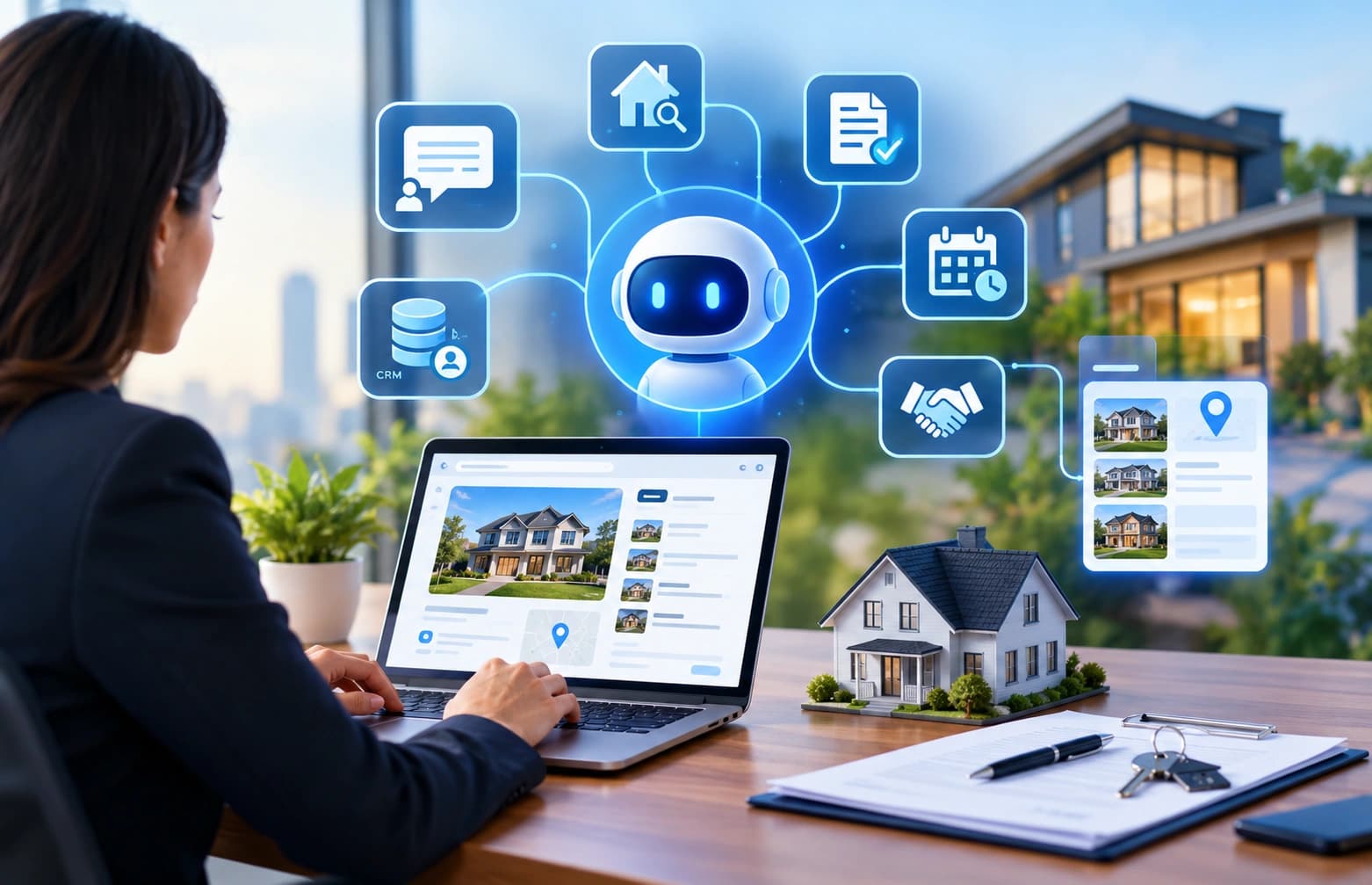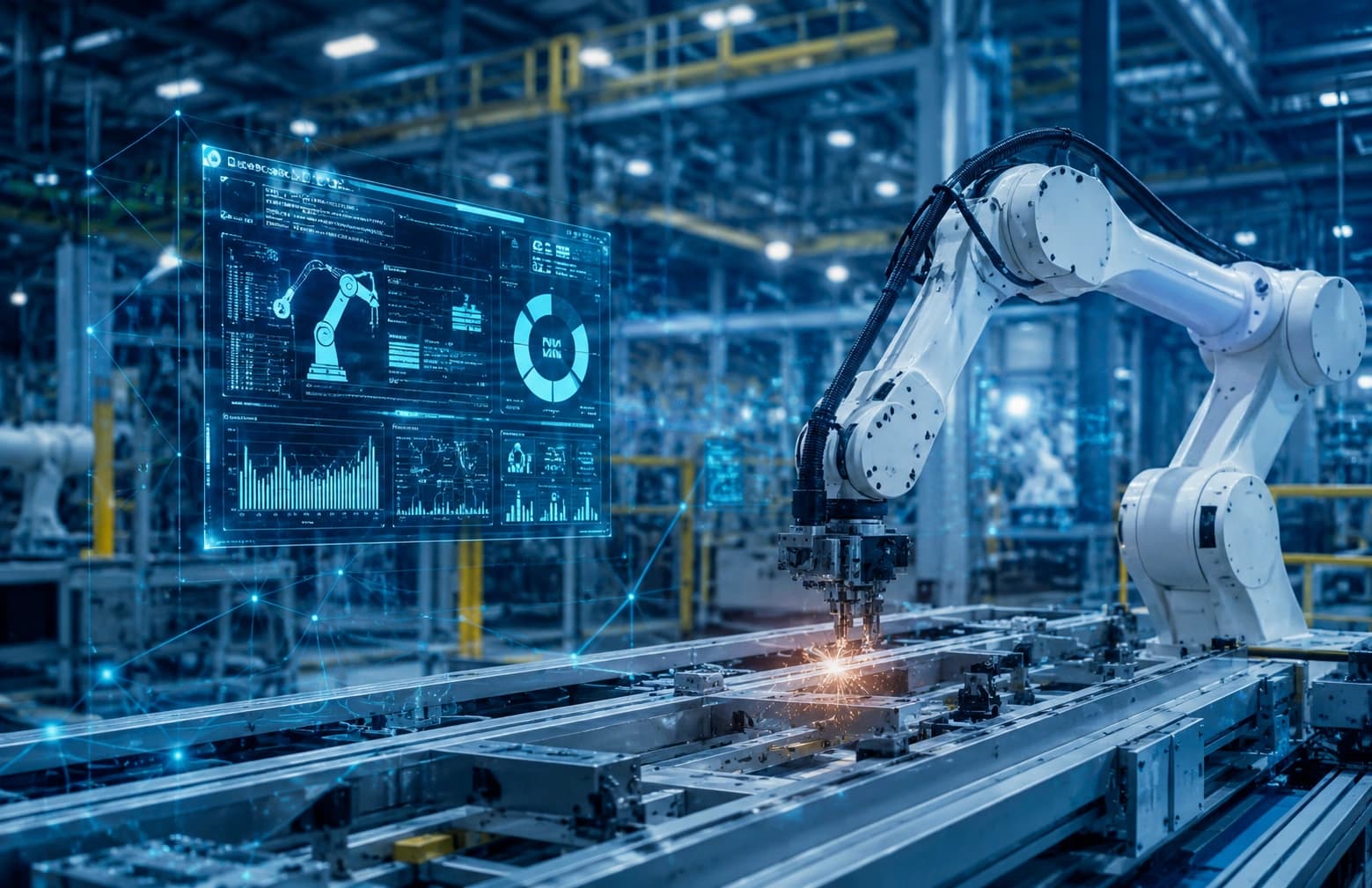
The business landscape has moved beyond introductory pilots. Today, corporate executives focus less on whether machine learning models can process data and more on establishing the governance frameworks and scalable infrastructure required to operationalize them. To be an AI-first enterprise, you need to do more than just integrate discrete software. You need to totally re-engineer essential operational processes because true digital acceleration needs a defined data strategy, production-grade infrastructure, and durable execution frameworks.
At Seasia Infotech, we specialize in building backend data pipelines and model integration strategies that power these intelligent business models. Our engineering-driven AI and ML services enable organizations to upgrade outdated systems, build strong model monitoring practices, and launch scaled cognitive apps that yield demonstrable operational efficiencies.
Defining the AI-First Enterprise Core Architecture
An AI-first enterprise is defined by its foundational data flow. It treats continuous data ingestion as a direct trigger for automated logic. Rather than waiting for a scheduled analytics batch run, the core infrastructure uses integrated orchestration layers to process incoming data, feed it into custom machine learning models, and execute systemic actions across backend applications via secure API connections.
Operating with a mature, AI-first infrastructure means your business systems move from a reactive posture to predictive execution, introducing structural capabilities such as:
Decentralized Feature Stores: Standardizing data transformation pipelines across all departments to ensure real-time model inputs remain accurate, consistent, and completely free from training-serving skew.
Context-Aware Orchestration Layers: Moving past simple, deterministic conditional statements (if/then) toward dynamic software agents capable of routing workflows based on semantic context and real-time operational risk assessments.
Closed-Loop Feedback Pipelines: Automatically capturing the outputs of deployed models, logging human-in-the-loop validation data, and feeding those signals back into training databases to enable continuous, programmatic optimization.
Achieving this level of architectural maturity requires deep engineering expertise. By leveraging specialized AI and ML services, modern organizations can systematically dismantle restrictive technical debt, clean up messy data estates, and deploy high-performance model environments tailored to complex industrial requirements.
Technical Deep Dive: The Enterprise Infrastructure Stack
A complex, multi-layered technological stack is required to build a flexible, robust digital environment. Our targeted AI development services are focused on establishing and optimizing these fundamental technological building blocks to construct a strong company foundation:
Agentic Generative AI and Retrieval-Augmented Generation (RAG)
Today's corporate solutions have advanced beyond simple open-ended prompt windows and shallow chat sessions. Production systems are based on Agentic AI architectures and coordinated software ecosystems that can break down complicated multi-step instructions, plan how to execute them, and communicate with essential business databases via secure APIs.
We build enterprise-grade RAG (Retrieval-Augmented Generation) pipelines that stop hallucinations and secure confidential data. This approach connects huge models to vector databases using high-throughput embedding models. Internal autonomous systems retrieve only contextually relevant real-time business data using innovative chunking techniques, hybrid keyword and semantic search algorithms, and metadata-based reranking stages.
High-Throughput MLOps and Custom Machine Learning
To use statistical models, you must be very diligent in managing the life cycle. We specialize in machine learning development and offer clean end-to-end MLOps (Machine Learning Operations) pipelines to handle the whole life cycle of unique supervised and unsupervised learning models.
The first step is to implement automatic data validation and entry into a central feature store. Once you're done training a model, put it in the best containers possible and use progressive spread methods (like canary or blue-green deployments) to put it behind fast API ports. As soon as the latency data starts coming in, the forecasts are checked against the distributions, the underlying traits are looked at to see how relevant they are, and mistakes are reported early.
Advanced Natural Language Processing (NLP)
Most enterprise communication data is disorganized and stored in large volumes of emails, service tickets, legal documents, and regulatory documents. Modern NLP systems can quickly process these complicated communication channels thanks to transformer-based tokenization and named entity recognition (NER).
These technologies take clean, organized data and feed it directly into automation engines. This cuts down on the time it takes for people to enter data, finds big risk factors, and confirms compliance points on a large scale.
Industrial-Grade Computer Vision Networks
Processing real-world visual elements needs highly efficient, low-latency deep learning models. Convolutional neural networks (CNNs) and vision transformers are installed directly on edge computing hardware in asset-heavy sectors and in sophisticated manufacturing settings.
These models monitor manufacturing lines in real time, finding tiny physical irregularities, measuring the usage of logistics yards, and verifying the implementation of safety standards in warehouses, all without causing processing delays in physical operations.
High-Dimension Predictive Analytics
Predictive analytics engines move a company from a defensive patching stance to a proactive operating stance. Using multivariate time-series forecasting models and survival analysis algorithms on continuous historical data, firms may discover hidden operational patterns.
These engines help predict future equipment deterioration timelines, localized demand surges, and detect early symptoms of customer churn long before they harm financial performance.
Engineering Operational Reliability Across Core Departments
The integration of specialist AI and ML services into core enterprise systems brings a layer of sophisticated, data-driven intelligence to all the major departments in a corporation.
Supply Chain and Inventory Balancing
Traditional Enterprise Resource Planning (ERP) technologies are essentially reactive and calculate procurement plans based on prior quarterly performance. An AI-first infrastructure pulls real-time data from global shipping logs, regional weather feeds, and live supplier inventory feeds.
These complicated data streams are then analyzed with proprietary regression algorithms to forecast probable transportation delays weeks in advance. When the system sees that there may be a lack of supply, it notifies the procurement teams and suggests other places to get the supplies. This helps to manage the inventory at the best level, without having too much stock in the warehouse and tying up working capital.
Automated Financial Risk and Regulatory Compliance
High-volume financial transactions require fast, automated screening. Today’s fraud-detection programs analyze thousands of live transaction data points per second and compare them with historical behavioral baselines to identify anomalous activity and prevent it immediately.
Automated parsing engines work in real time to cross-reference rapidly changing local financial laws against current accounting procedures and indicate any discrepancies for risk officers before they result in expensive compliance audit failures.
Contextual Customer Session Management and Retention
Modern CRM applications leverage sophisticated real-time behavioral data analysis. Rather than clunky, pre-programmed decision trees that annoy consumers, the automated service layers analyze the exact sentiment and technical purpose underlying customer messages.
At the same time, predictive retention algorithms look for modest declines in platform interaction and usage velocity, notifying account management teams, and activating specialized, automated re-engagement procedures to retain client lifetime value.
Practical Applications and Architectural Impact
Real-world production deployments illustrate how tailored AI and machine learning systems significantly improve operational efficiency across diverse corporate sectors:
Clinical Data Management in Healthcare
Medical systems use specialized clinical NLP pipelines to extract critical insights from unstructured health records. This safely groups patient data to match individuals with appropriate clinical protocols, while deep learning vision models accelerate image analysis, helping radiologists speed up diagnostic workflows.
Automated Credit Scoring in Fintech
Financial institutions utilize custom AI and machine learning solutions to transform traditional credit risk assessments. By securely analyzing alternative behavioral data points alongside historic transactional records, automated underwriting systems evaluate loan applications in seconds while maintaining strict risk boundaries.
Omnichannel Demand Syncing in Retail
Global retail brands connect demand for digital e-commerce storefronts directly to backend manufacturing schedules. Predictive time-series models minimize warehouse overhead by calculating precise regional inventory requirements, avoiding both stockouts and overstock scenarios.
Telemetry-Driven Predictive Maintenance
Heavy industrial plants install IoT vibration and thermal sensors across critical manufacturing machinery. Centralized machine learning pipelines analyze this continuous stream of telemetry data, predicting mechanical wear patterns to schedule preventative maintenance before actual equipment failures can halt production.
Strategic Navigation of Enterprise Implementation Challenges
Moving to an AI-first operational model requires navigating real-world data engineering and infrastructural hurdles. Successfully scaling these systems means addressing three primary friction points:
Systemic Data Fragmentation: The accuracy of any machine learning model depends entirely on the structural quality of its training data. Legacy enterprise setups frequently trap valuable data across isolated departmental silos. Resolving this requires building unified data lakes and automated ETL pipelines to supply models with clean, accessible datasets.
Model Performance Degradation (Drift): Production environments are constantly changing. A predictive model optimized for consumer trends in 2025 can lose accuracy as economic conditions evolve in 2026. Mitigating this risk requires implementing a strict MLOps telemetry infrastructure that continuously monitors data inputs and automatically triggers retraining loops when statistical drift exceeds predefined thresholds.
The Technical Engineering Deficit: Designing, securing, and maintaining highly compliant AI infrastructure requires deep specialization. Building a complete internal team of data engineers, ML architects, and security specialists demands substantial capital and time.
Partnering with a dedicated technology provider helps organizations bypass these common deployment bottlenecks. Utilizing proven AI & machine learning services provides your business with immediate access to production-ready reference architectures, security frameworks, and mature data governance models.
Engineering Your Intelligent Core with Seasia Infotech
Transitioning to an AI-first operational model requires an intentional, highly disciplined engineering roadmap. Seasia Infotech provides the precise technical standards and structural oversight necessary to build highly stable, enterprise-grade cognitive platforms.
The full range of artificial intelligence and machine learning services we offer is provided through an open and well-organized lifetime framework:
Technical Data Audit: Evaluating your existing data estate, infrastructure readiness, and system integration points to verify architectural feasibility.
Targeted Architecture Design: Making a safe plan for integrating custom models, setting up API route networks, and setting up separate MLOps infrastructure.
Production Model Construction: Building and testing custom models, cleaning up raw datasets, and setting up automatic feature extraction processes.
Enterprise Scaling & MLOps: Putting live systems in place with ongoing performance tuning, automatic guardrails, and drift tracking.
We focus on setting up secure data flows, picking the best modeling strategies for your specific business goals, and keeping your infrastructure safe with strict data security rules. Our AI ML software services help your business get rid of operational delay, lower technical debt, and stay flexible in the market over the long term. They include everything from creating initial custom machine learning models to implementing full company-wide automation frameworks.
Get in touch to explore our complete range of AI and machine learning development services.